No Sabo
February 7-March 7, 2026
Reception February 7, 3-5 pm
Guest Curated by Adelaide Blair
Virtual Artist Talk: Sunday Feb 15th, 2026 1pm
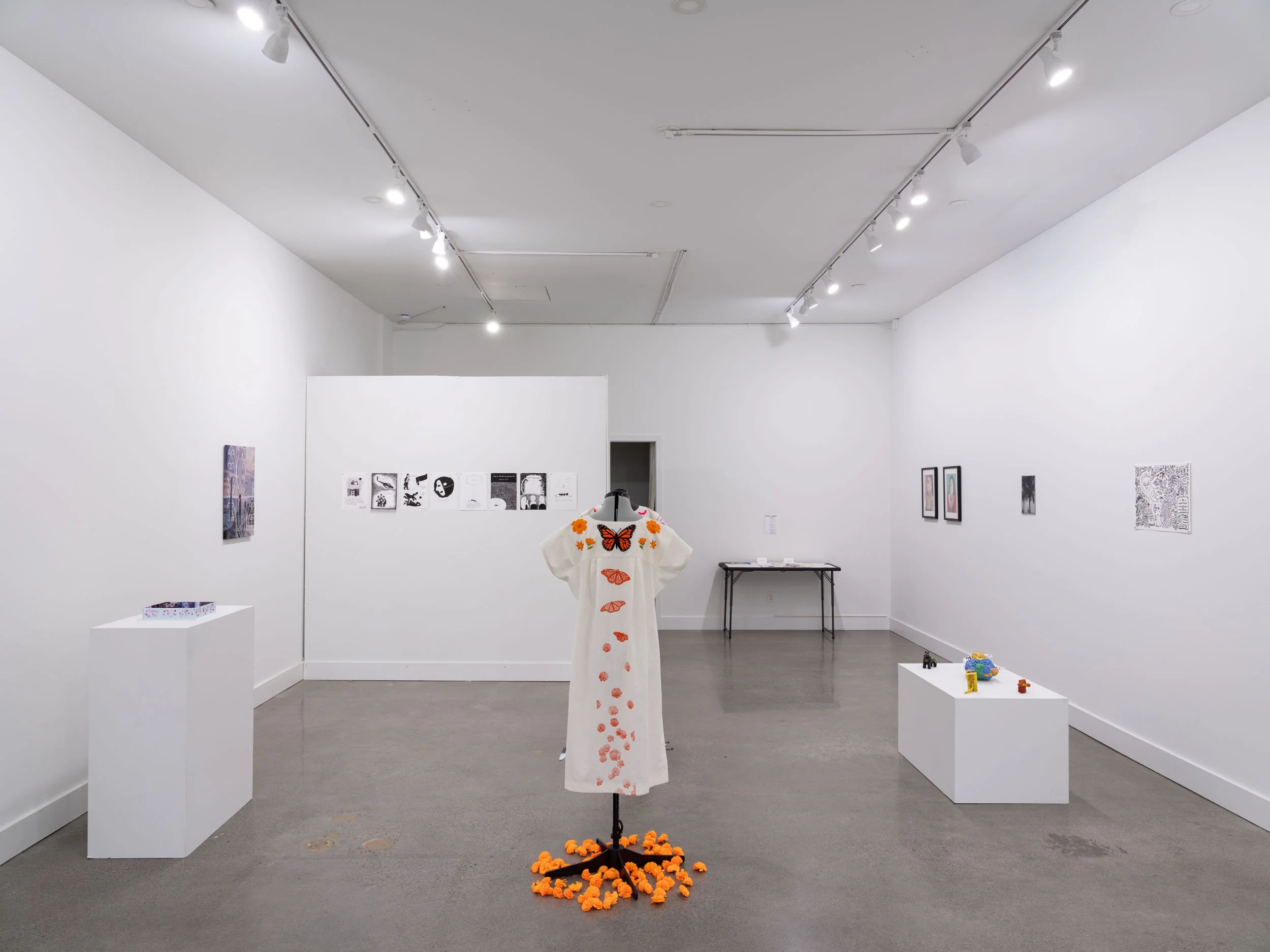
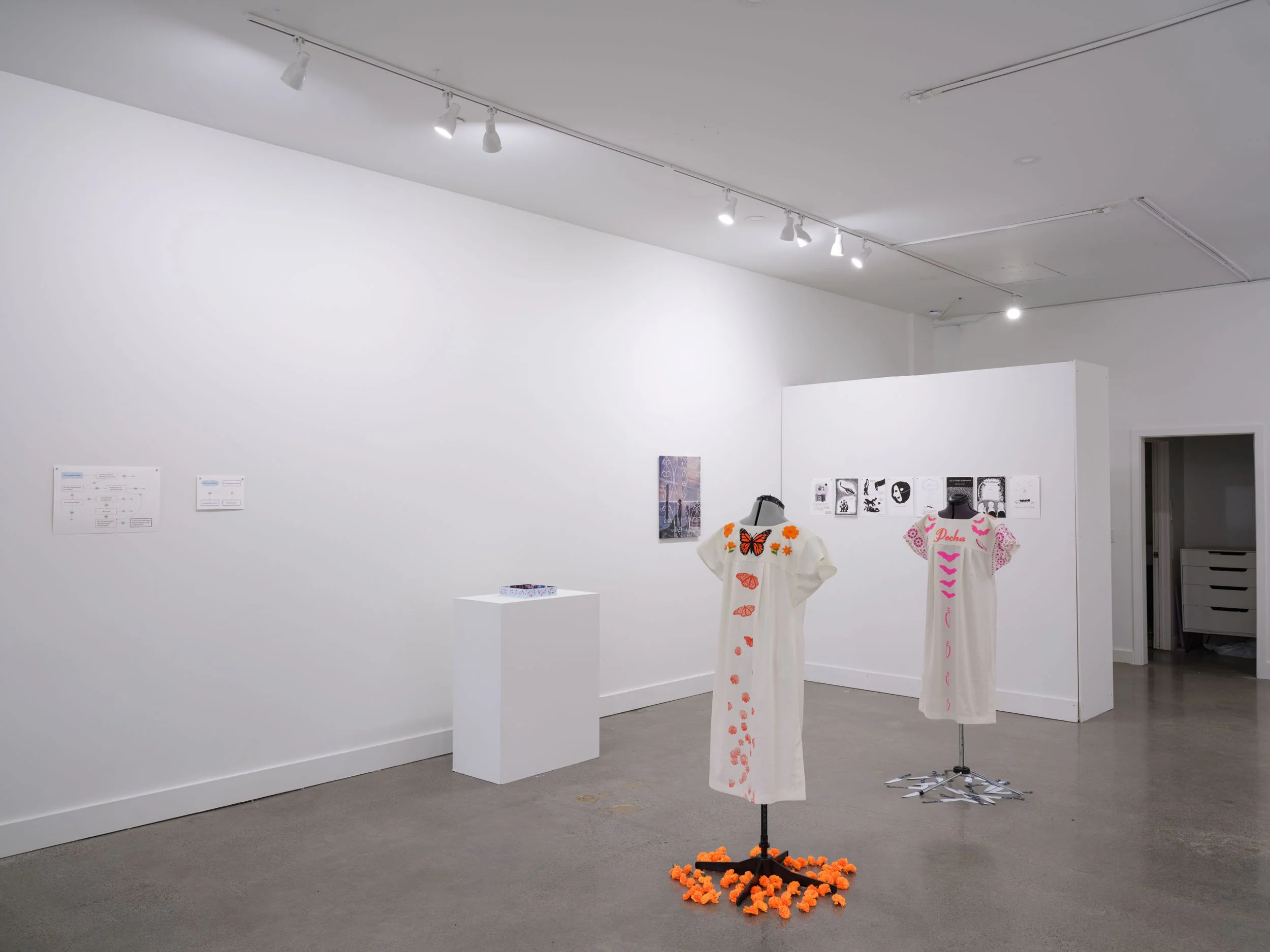
“No sabo kid” is a slang term for someone of Latino descent who does not speak Spanish very well or at all. In Spanish, the phrase “I don’t know” is “no se,” but a common way to say it wrong is “no sabo.” If you use the latter phrase, anyone who is fluent in Spanish will know that you are not. No Sabo is a group exhibition of nine artists who explore what it means to be a Latino/a/e/x who does not speak Spanish. How does one navigate cultural expectations, familial relationships, and self-identity when one is missing a key component of how Latinos are traditionally defined?
Guest curated by Adelaide Blair
Artist Statements and Bios
-
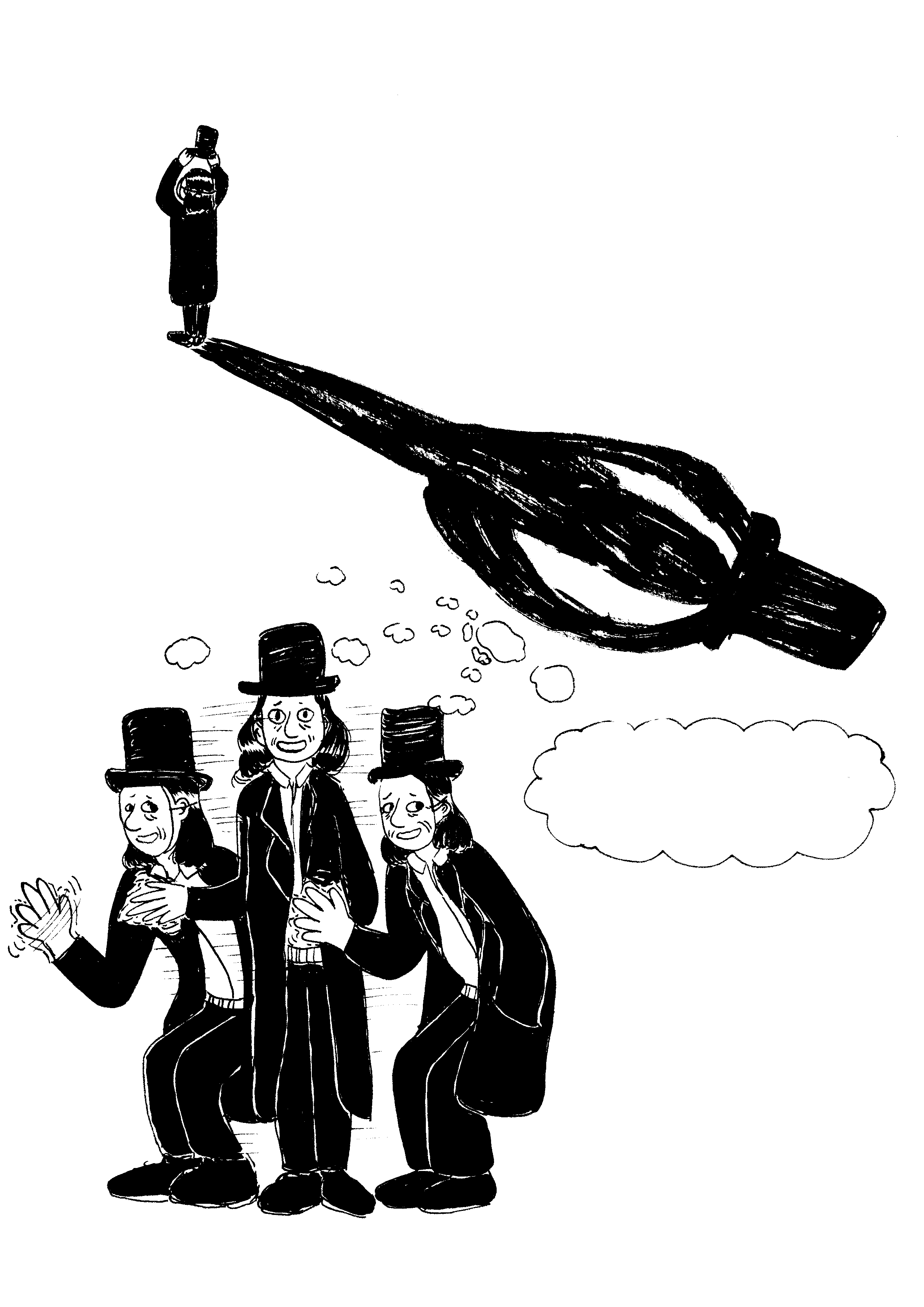
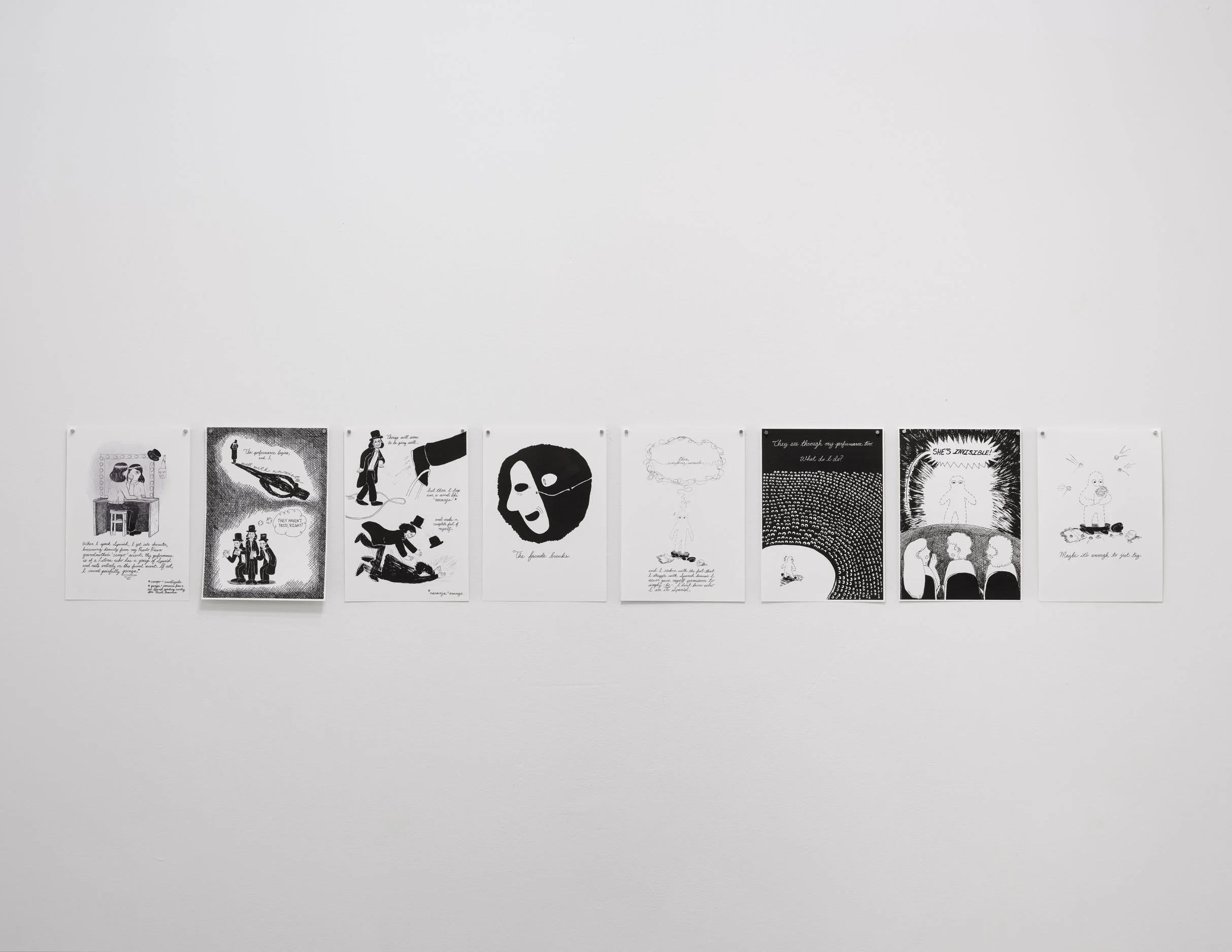
Eva C. is Latinx cartoonist whose non-fiction comics are a means to foster connection, focusing on her personal experiences and those of others. She is interested in exploring the sobering and inspiring moments of daily life, capturing the heart of why certain moments stay with us at all. Originally from Queens, NYC, Eva is currently based in Ireland.
Statement: When creating this comic, I was inspired by vaudeville performer Bert Williams’ song “Nobody” and John C Reilly’s performance of the song “Mr. Cellophane” from the musical Chicago. Both performances are in dialogue with each other; the songs proclaim a desire to be fully seen. This comic is my contribution to that artistic thread. My character wants to be accepted fully as a Latina but fears rejection from her community and beyond. Thus, she puts on a mask, symbolizing her attempt to sound like a native Spanish speaker.
-
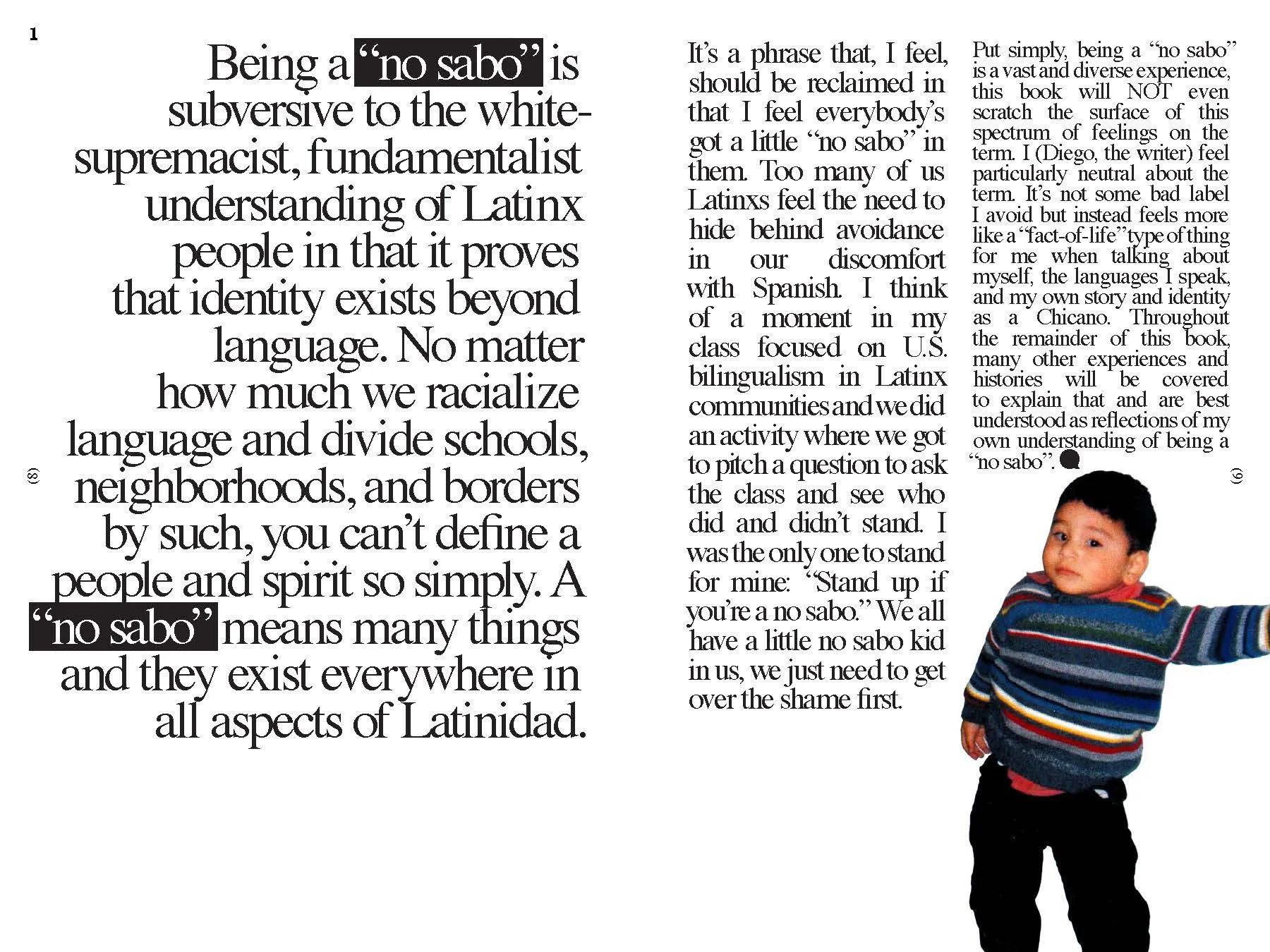
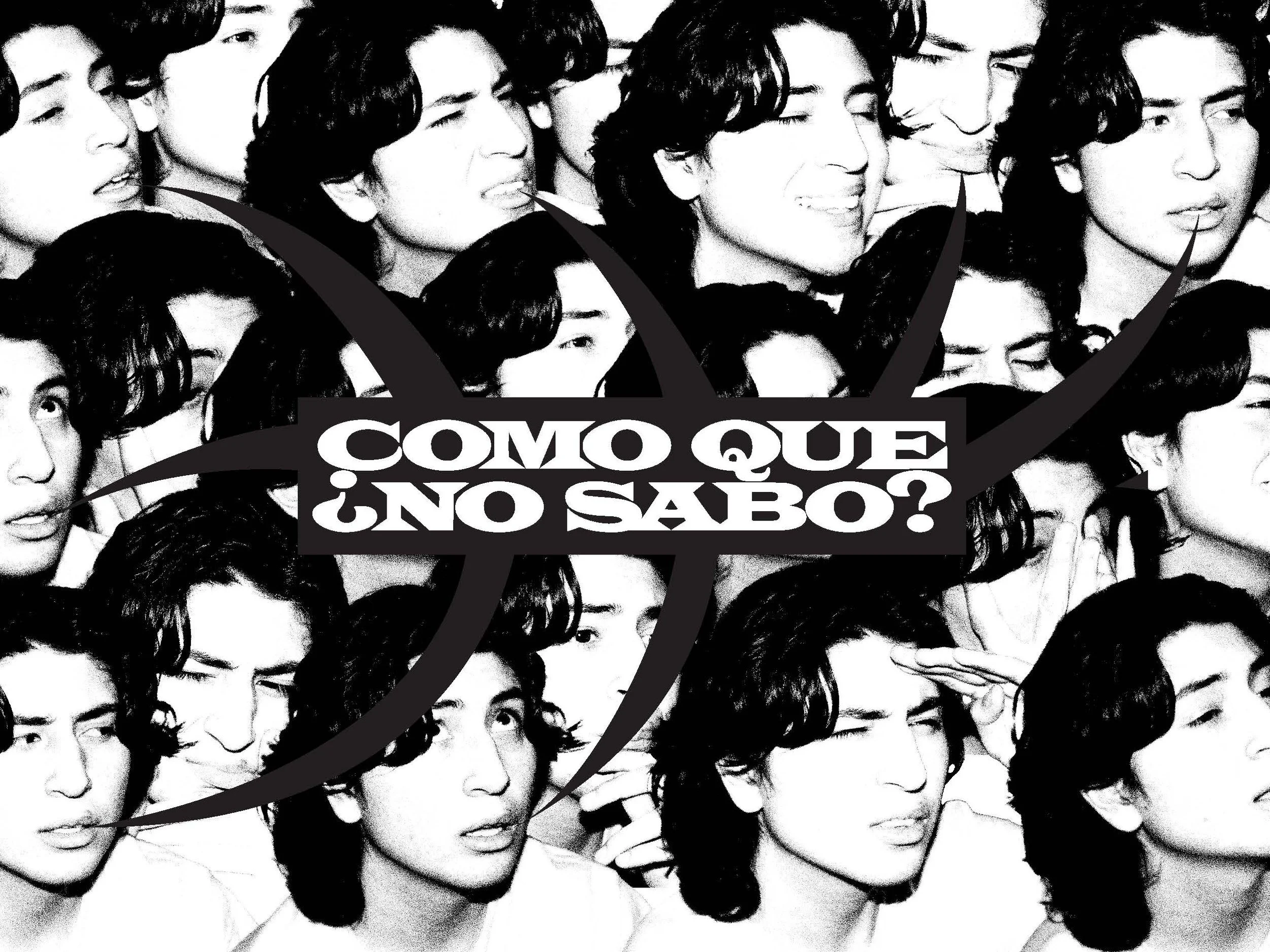
Diego Garibay is Xicano graphic designer and artist with a practice centered in identity and the fuzzy memories that define his love for letterforms, printed matter, and the funny little signs and graffiti tags you pass by on a walk. His work ranges from 200+ page publications, a collection of travel tags, an array of posters large to small, a library of foldouts and brochures, a small collection of paintings and drawings, many t-shirts, hoodies, stickers, and even packaging for strawberries. Born in the rolling hills of McMinnville, OR. AKA “wine country”, he now resides in Portland, OR. and enjoys his fair share of coffee shop work sessions and walking back home in the rain. Having worked with many clients across the PNW, he currently works as the Publicity Coordinator for Littman & White Galleries, a student-run set of art galleries on-campus at Portland State University…an institution where he is simultaneously pursuing a BFA in Graphic Design and BA in Chicanx/Latinx Studies. diegoegaribay.cargo.site.com
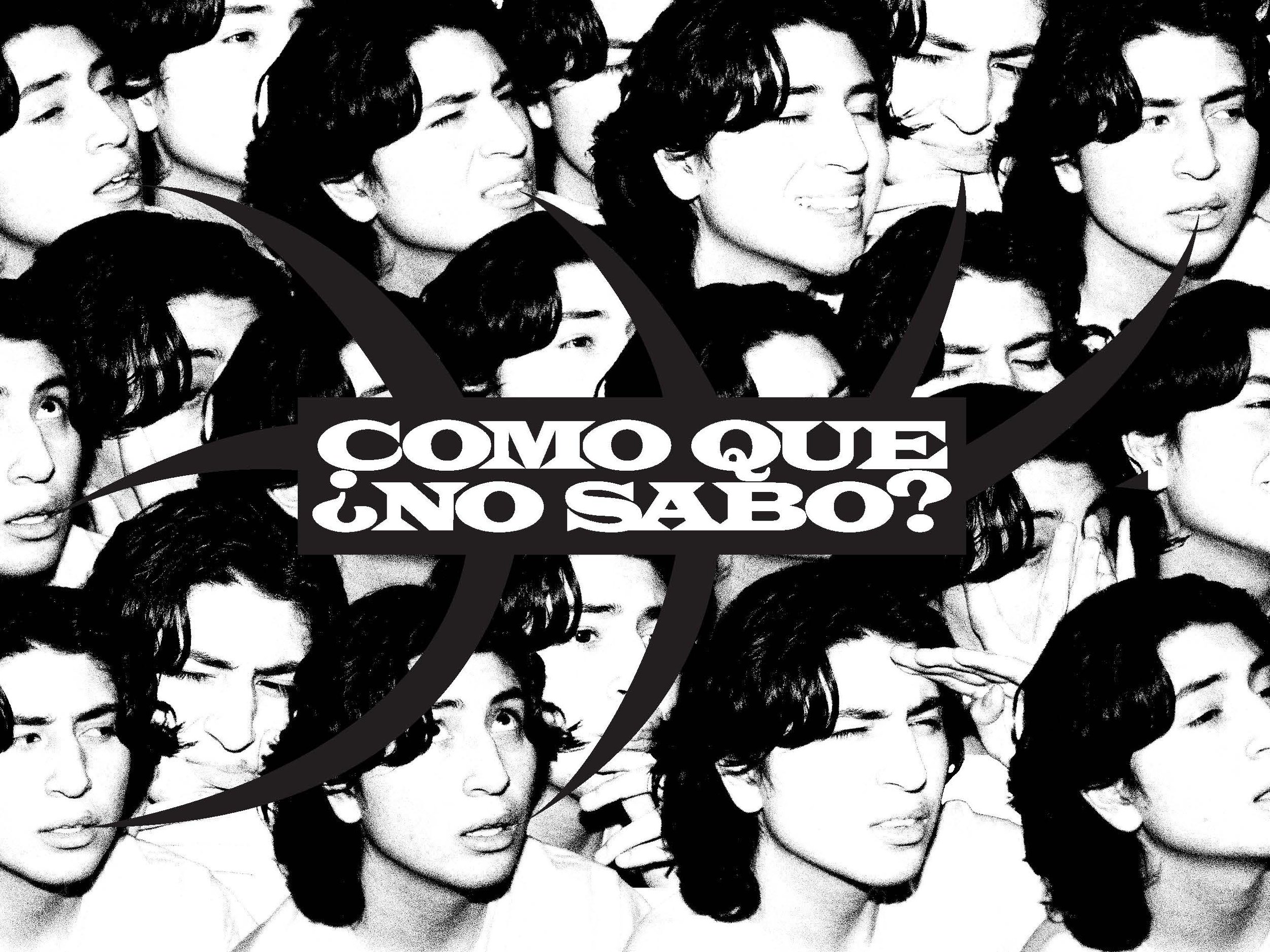
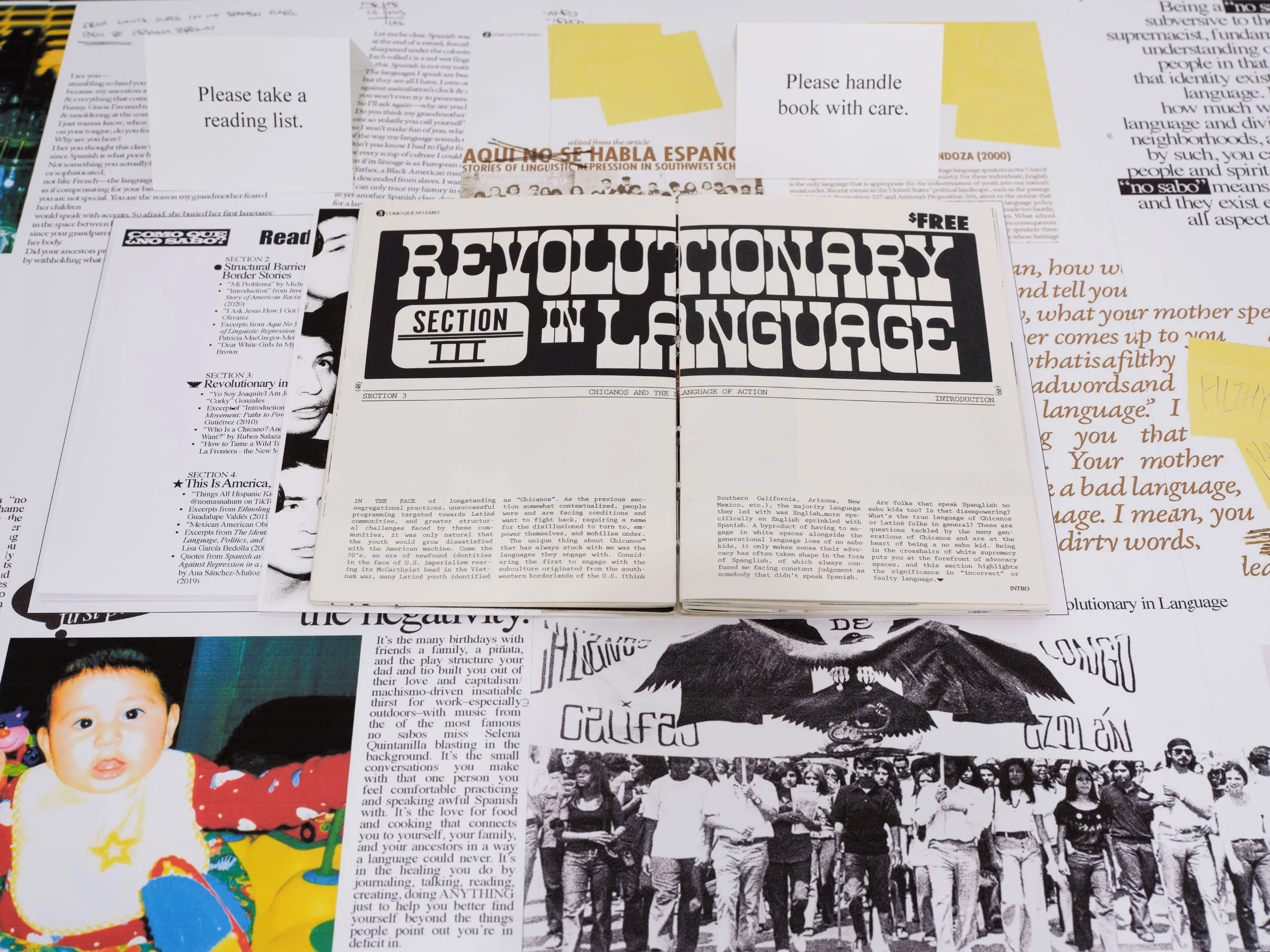
Statement: My earliest memory of my childhood is a fuzzy, chest-tightening jumble of the words “disappointing” and “confusing,” leaving one of my tia’s mouths at some point to my parents. Whether this memory is true is questionable, even to me, but the distinct feelings, the sharp pain, the slight dizziness that would become all-consuming every time I “remembered” this likely-amalgamated memory born from many small familial and social experiences, shaped my no sabo identity. It wouldn’t be until I left a high school full of people claiming I was “practically white” for my lack of Spanish-speaking prowess that I made progress on exploring my place in Latinidad and my brownness. As a graphic designer, I felt it necessary to document, compile, and archive many of the poems, art pieces, photos, and articles that shaped my understanding of what it means to be a no sabo kid, especially in a day and age where more and more folks are finding themselves in these shoes. “¿Como Que No Sabo?” asks the literal question, “What do you mean no sabo?” and the spectrum of experiences the title holds. From self-hating, white-supremacist bootlicking to self-loving and joyous care and understanding, I felt it necessary to use my ongoing exploration of my identity to tell my own story on what it can mean to be a no sabo.
-
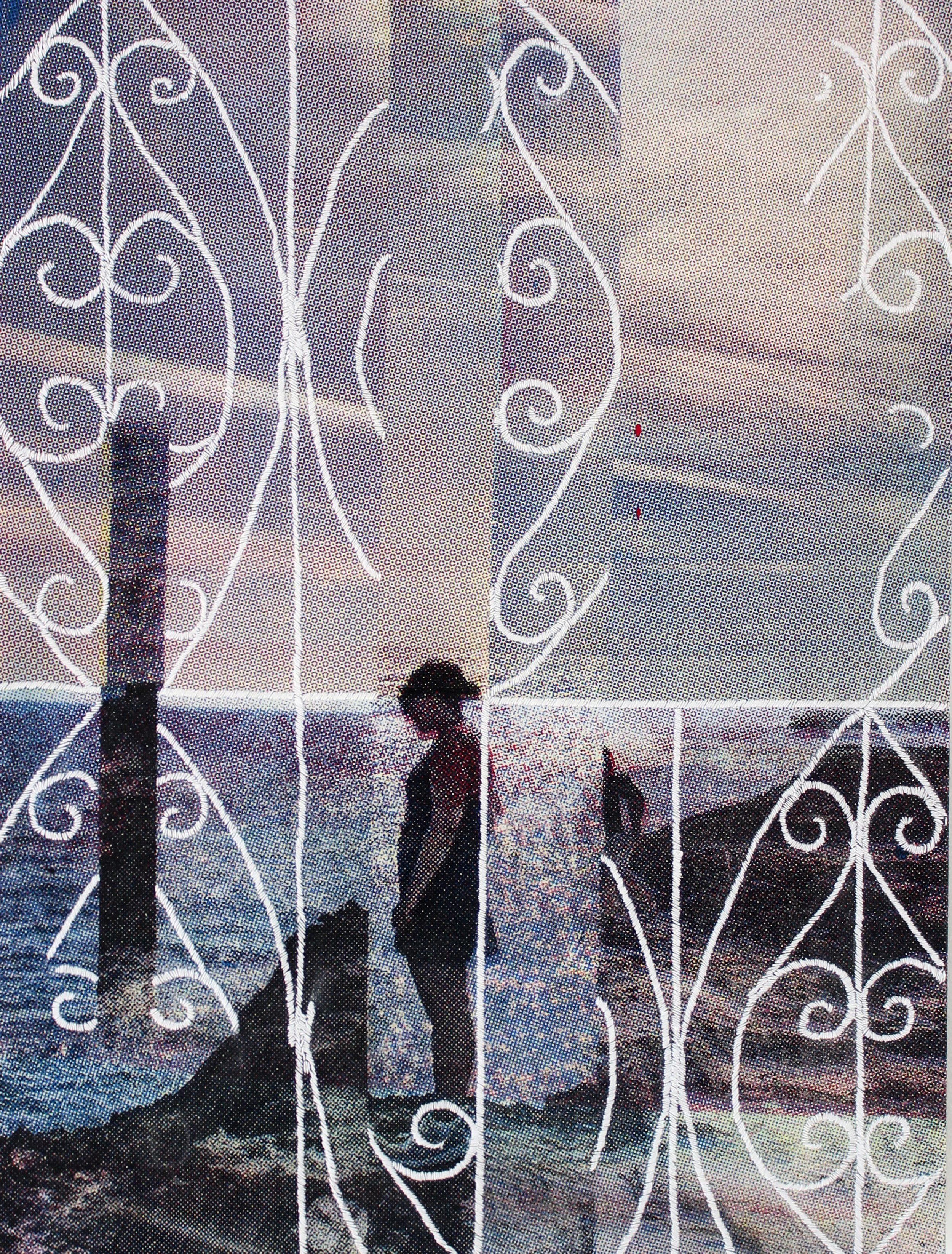
Elisa Dore is a visual artist from Atlanta, Georgia. Her practice, rooted in printmaking, functions as a record of personal and ancestral histories and how place informs constructions of identity. In an attempt to physically manifest amorphous concepts of identity, culture, or memories, an image carved into wood or etched into stone offers a tangible answer. Her practice addresses interstitial ways of being that are often untranslatable to words. Her work has been shown nationally and internationally, including at the Atlanta Contemporary Art Center, the Bainbridge Island Museum of Art, Highpoint Center for Printmaking, the Hall of Awa Japanese Handmade Paper, and Pública (San Juan, Puerto Rico). She is a recipient of the Ernest G. Welch Fellowship and is currently an MFA candidate in printmaking at Georgia State University in Atlanta.
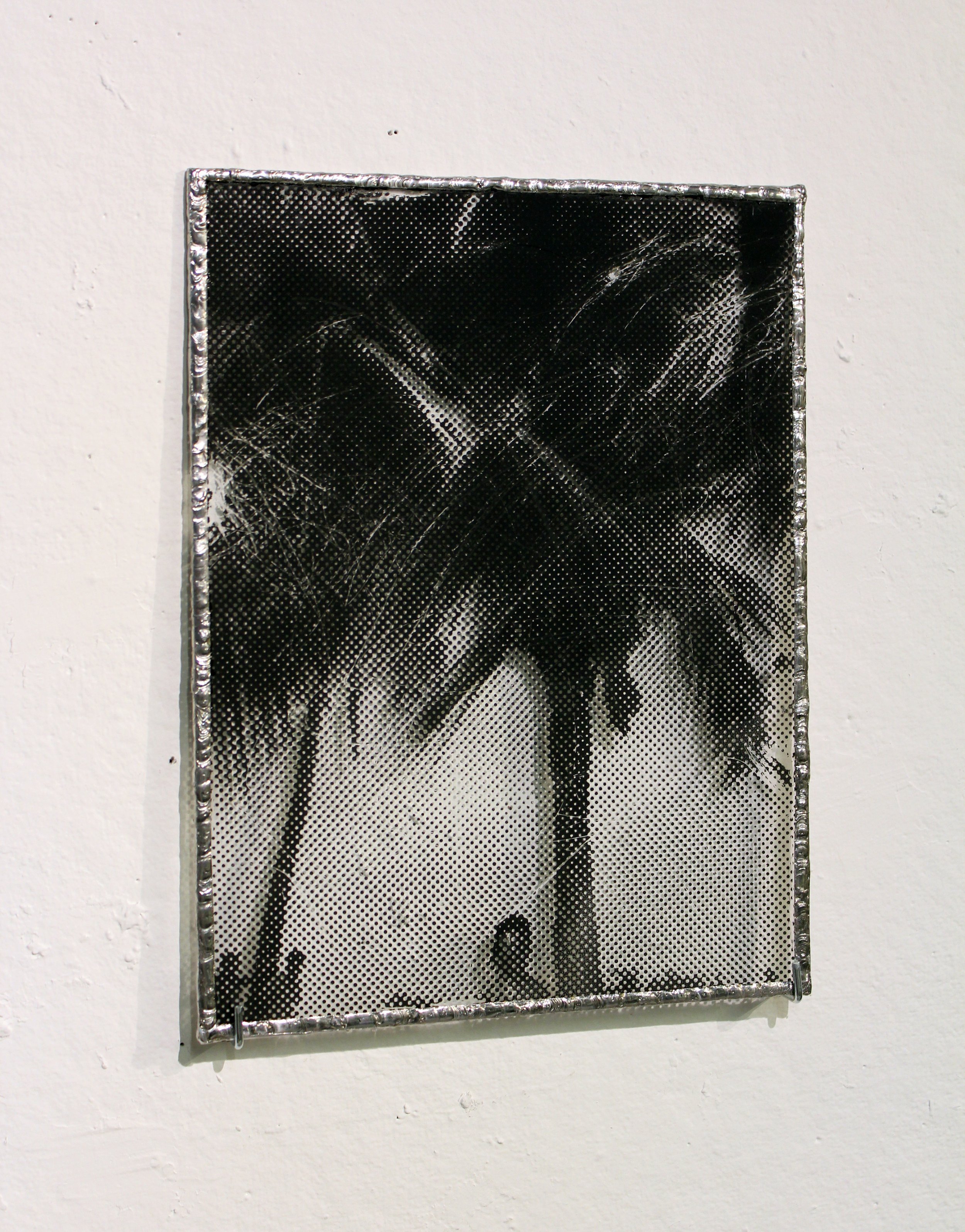
Statement: The two works I have included consider the way photographs act as memory keepers, and how reliable and unreliable they can be. The photos came from my personal archive and an archive of family photos, and both were taken in Puerto Rico, where my mother's family is from. As someone of Puerto Rican descent who was raised in the United States and wasn't taught Spanish as a child, I am often negotiating my identity and my relationship to the place my family comes from. One way of doing this is through photographs. For the piece Window I screen printed on glass and left the surface untreated, leaving it vulnerable to scratching and fading, much like how memories change and fade. In the piece Construir una casa de agua, I began with a screen printed photo that I manipulated and embroidered over. Much like the blurred image that came out of it, I find that there are blurry spots and barriers between me and the place that informs my identity.
-
Adelaide Blair is a conceptual artist and writer whose research-centered practice allows her to interact with and learn about the world. She is involved in publishing, printmaking, web design, needlework, drawing, writing, performance, and filmmaking, and is also interested in distributed intelligence and how people make art together. Her current ongoing project is a simulation, the Pacific Northwest Conceptual Art Center. Originally from Southern Oregon, Adelaide currently resides in Seattle, Washington. She has a BFA from Southern Oregon University, an MBA from the University of Washington Foster School of Business, and an MFA from The Pacific Northwest College of Art.
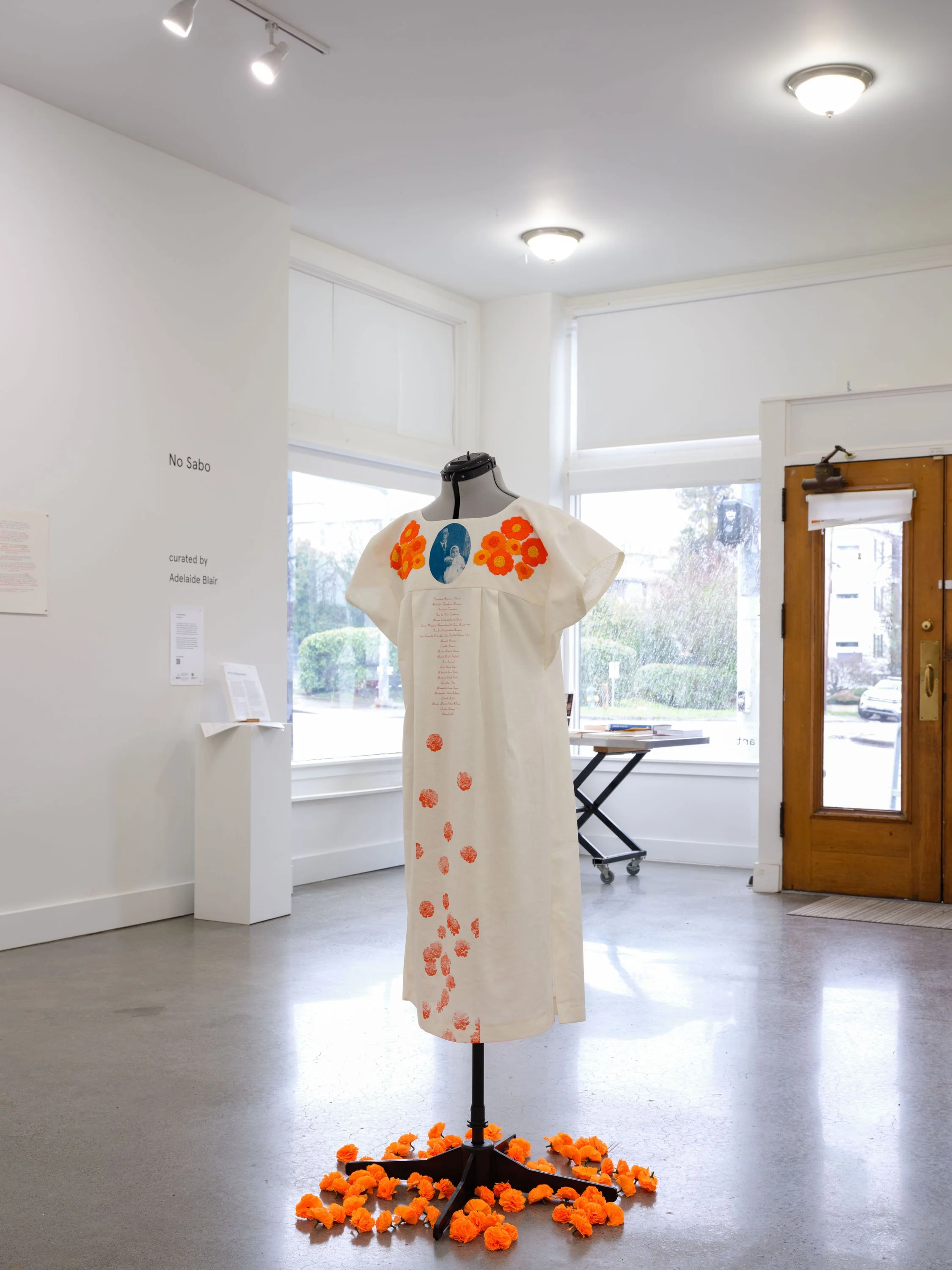
Statement: My grandmother left school in the fifth grade to apprentice as a seamstress in Mexico City and crocheted baby blankets well into her 90s. As soon as my legs could reach the pedal, she sat me in front of a sewing machine, and I’ve almost always had some sort of needlework project going ever since. When thinking about communicating with my Mexican family, it is the language of making that ties me to them, not Spanish. I can’t say my grandmother and I ever truly understood one another, but there was always conversation to be had about what we were working on. The two dresses in this show stand in conversation with each other: Ofrenda references a Day of the Dead altar, and La Pocha situates me in relation to it.
-
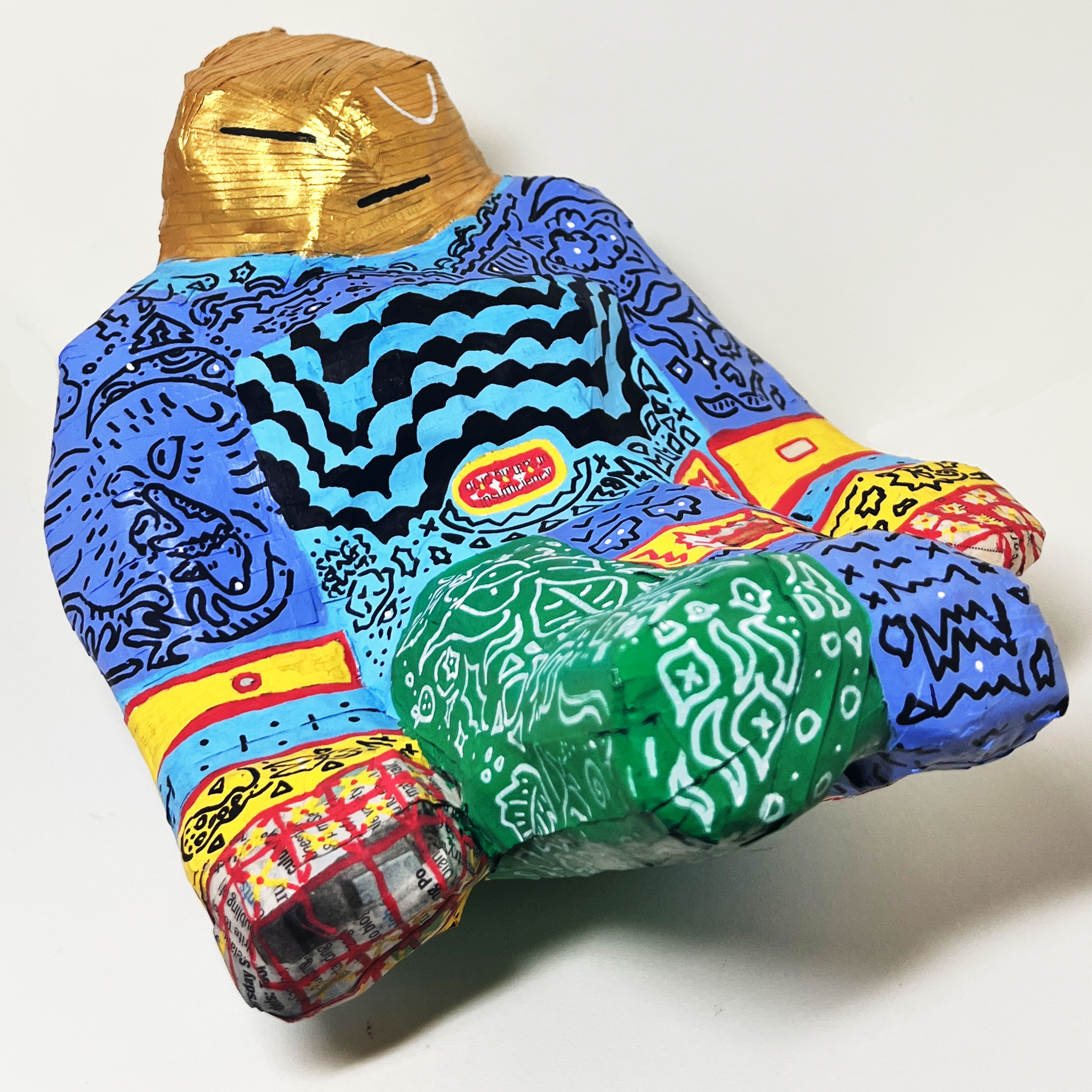
Octavia Xochi Maja Sánchez is an illustrator and sculptor whose identity-based practice and careful research allows her to express the world through her unique lens in the hope of mutual understanding. Her work ranges from traditional ink & digital art to papier-mâché. Her practice is largely directed by her own morals; working on mental health initiatives, with immigration activists, cultural revitalization, queer oral history, disability justice, and covid consciousness.She has a BFA from the University of Michigan, Penny Stamps School of Art & Design. Born in SE Michigan, she currently splits her time between Ann Arbor and Ypsilanti.
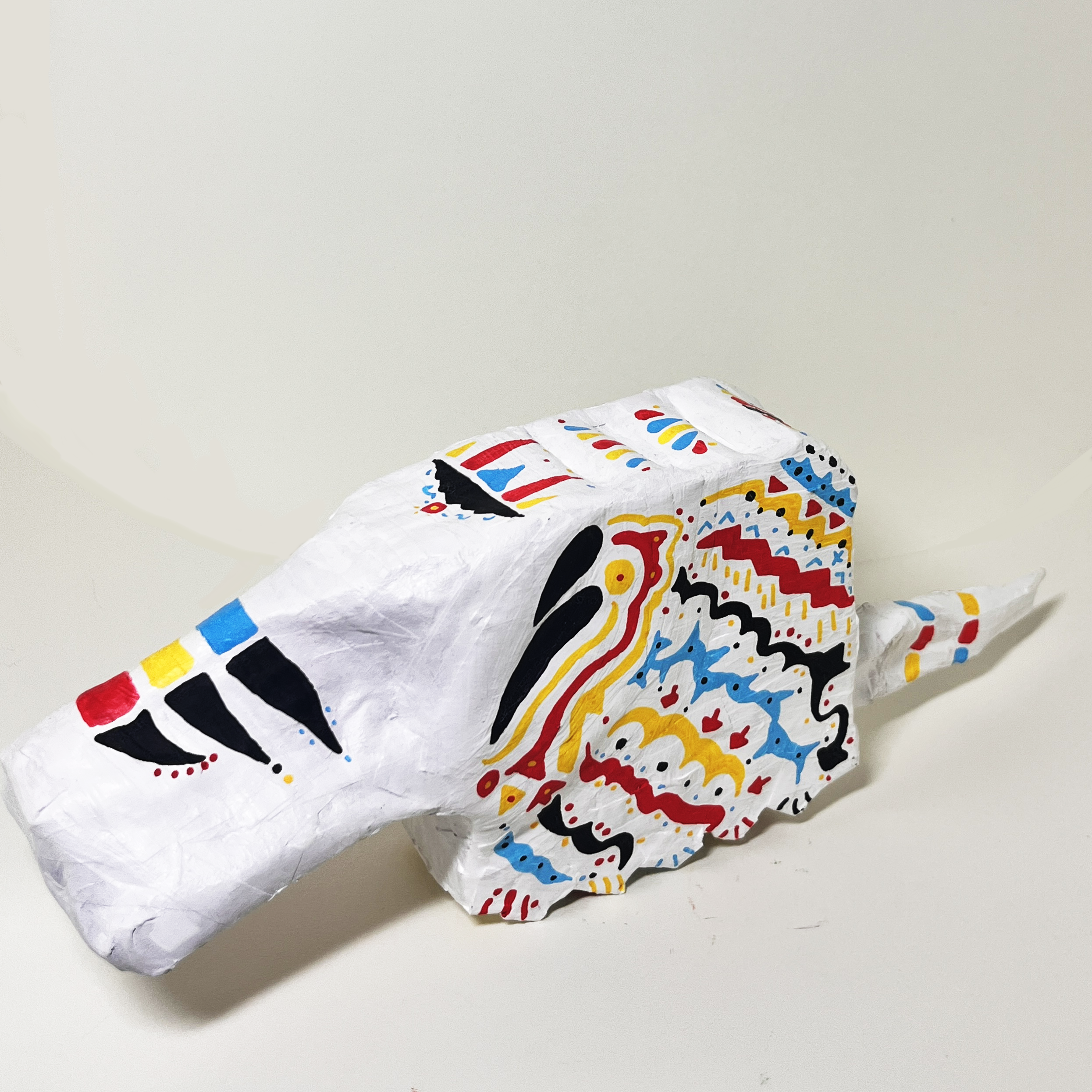
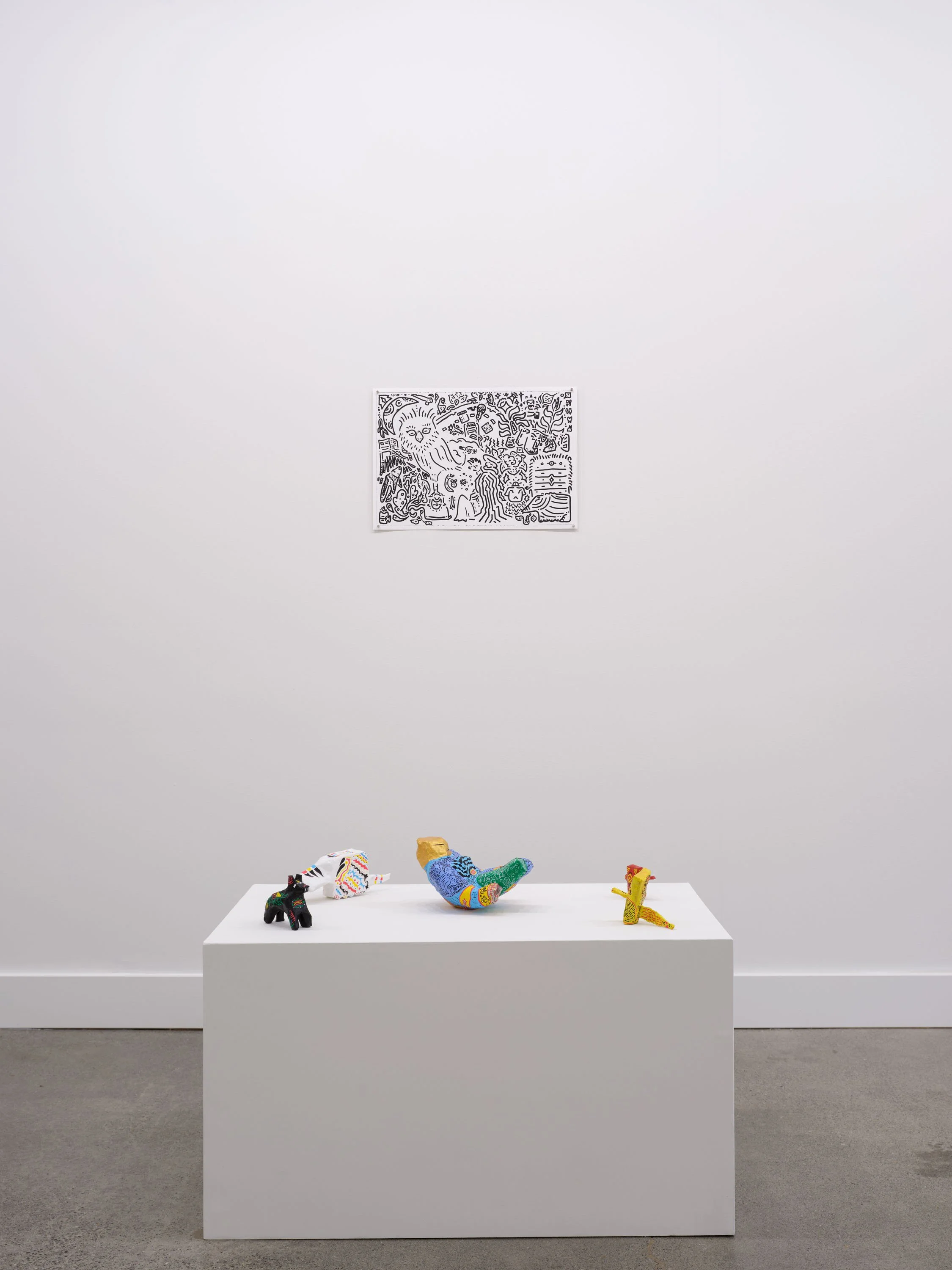
Statement: My connection in childhood with Mexico let alone the Spanish language was limited and cherished. My father dropping the occasional tidbit of his past in Mexico or California when he was generous or atypically unguarded; our mother, white, not always sure what to do with us. What family and friends we had that connected us were pressured and forced out entirely by age 10, and foreclosure in 2008 pushed us even further away from informal cultural centers. Loss is still a core part of who I’ve grown into. As an adult, I have endeavored to regain what I was not taught or have forgotten, with others and myself. It is slow-going and always worth it. Before cooking or gardening, art was my bridge and my anchor to something beautiful and marred by systemic oppression and persecution. What I do not have the right language to express, I do so in image. The work you see today is an effort to communicate the consequences of an experience in the ER November 2024 that would ultimately lead to a loss of function in both hands and one leg for several months due to mistakes made by medical staff. The incident was very directly connected to my persistence as a trans woman. The original image that inspired these alebrijes was the last thing I drew before my hands stopped working. The medium change was a physical necessity and the origin story of alebrijes made it even more fitting. They are made in the tradition of rasquachismo. I credit my stubbornness and my physical therapist with the ability to keep making beautiful, painful art. I will keep on doing so until I die. May it haunt you in my absence.
-
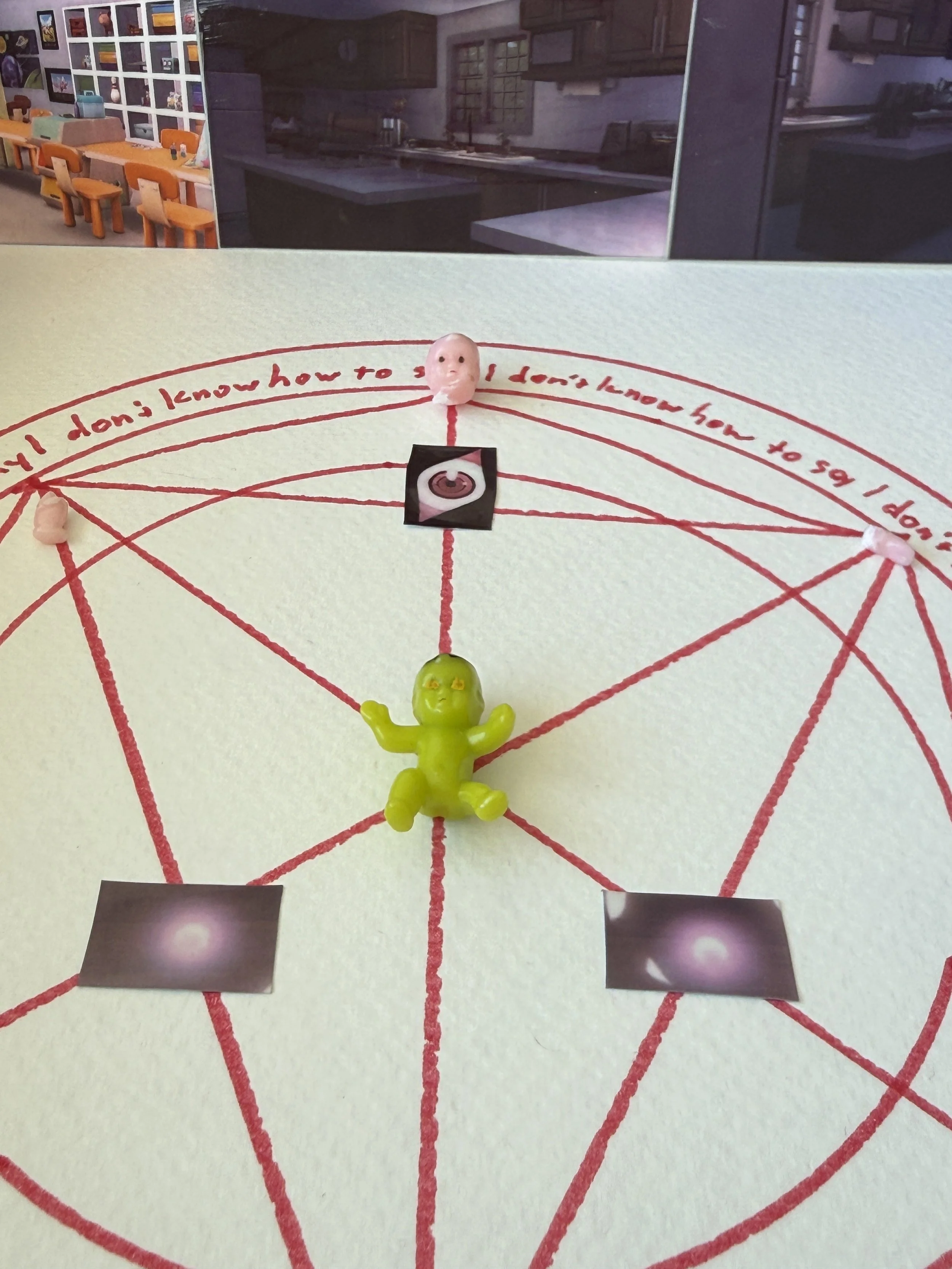
Valeria Haven Espinal (Val, they/them) is a queer mixed non-binary artist born and based in Seattle. Their work has been exhibited in group shows at The Vestibule, Center on Contemporary Art, The Fishbowl, and more. In Val’s microscope slide mixed media pieces, watercolor leaves the paper to explore the environment beyond the naked eye. The microscope-as-artist’s tool is an invitation to take a walk with the work, encouraging a double-take beyond initial assignments.
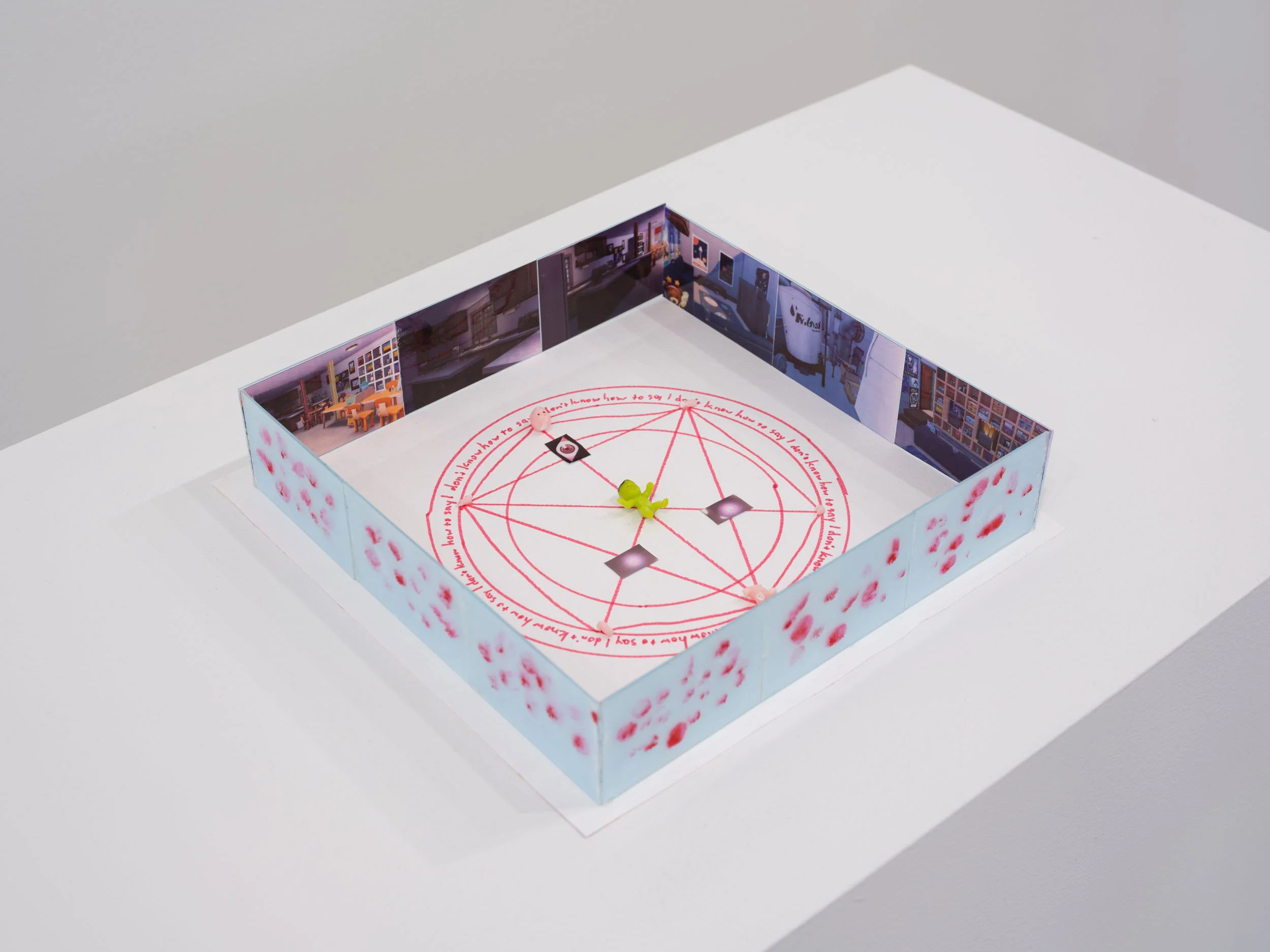
Statement: My childhood was largely defined by living in a daycare my parents owned until I was 16, while they focused more on their careers than taking care of my sister and I. Teaching me Spanish or anything wasn’t a priority and I was constantly surrounded by other children with no peace and nothing I could call my own. So, You Wanted a Gifted Child is a reassembly of memories and bitter feelings from growing up too fast, holding secrets and craving knowledge. Here, I dispute what “parents wanting the best for you” actually produces in impact versus intention through invoking taboos of alchemy and human sacrifice. I ask both Victor Frankenstein and my parents: What happens when you create someone without teaching them to communicate?
Microscope slides with photographic wallpaper display empty views of the daycare, rendered through the computer game The Sims by my sister. The walls house two figures, one dismembered in “plain flesh” and one with green skin and dull yellow eyes, echoing Frankenstein’s creature. What parents saw as me being a quiet and well-behaved child was actually bundles of repression rippling under my surface, yearning to create myself beyond the dead pieces of my family’s wishes.
-
Xochitl Nuño is an interdisciplinary artist based in Portland Oregon where she currently studies at Pacific Northwest College of Art. Through her works in painting, drawing, jewelry, beadwork, and fashion design, Xochitl intends to expand upon the Mexican Gothic art canon. Referencing Mexican motifs, cosmology, mythology, spirituality, and folklore, she seeks to interrogate the relationship between Catholicism and Mexican religious aesthetics.
Statement: These two drawings, “Turquoise Mother” and “Diana”, depict my Mom at different moments in her relationship to her Mexican identity. Raised in an adopted household where speaking Spanish wasn’t fostered, she turned to physical adornment as a means of connection. Through collecting jewelry from Mexican and Indigenous artisans, as well as engaging with folk art and Chicano literature, my mom found a deep appreciation for Latino art. The first painting, “Turquoise Mother”, depicts her before extensive tattooing, and after her more turbulent teenage years marked by gang involvement, capturing a quieter stage of her cultural exploration.
Following the loss of her father, my Mom felt a strong urge to explore her family history and reconnect with relatives separated by distance. To honor him, she got a tattoo that marked the beginning of a deeper connection to her culture through Chicano tattoos. The second painting, "Diana," portrays my mom marked by the presence of tattoos that speak to cultural memory and devotion, while impacting how my Mom is racialized and perceived in the world as a heavily tattooed Mexican.
-
Grace Gonzalez is a watercolor and gouache artist who twists her experiences and observations into metaphorical narratives, where concepts become characters and feelings become material. Inspired by the language of mythology and folklore, she utilizes symbols, surreal landscapes and animal figures to create stories on ephemerality and duality. She has shown at Soil Gallery, Slip Gallery, the Vestibule, and has created public works for Urban Artworks, North Seattle College, the city of Tukwila, and Spaceworks Tacoma.
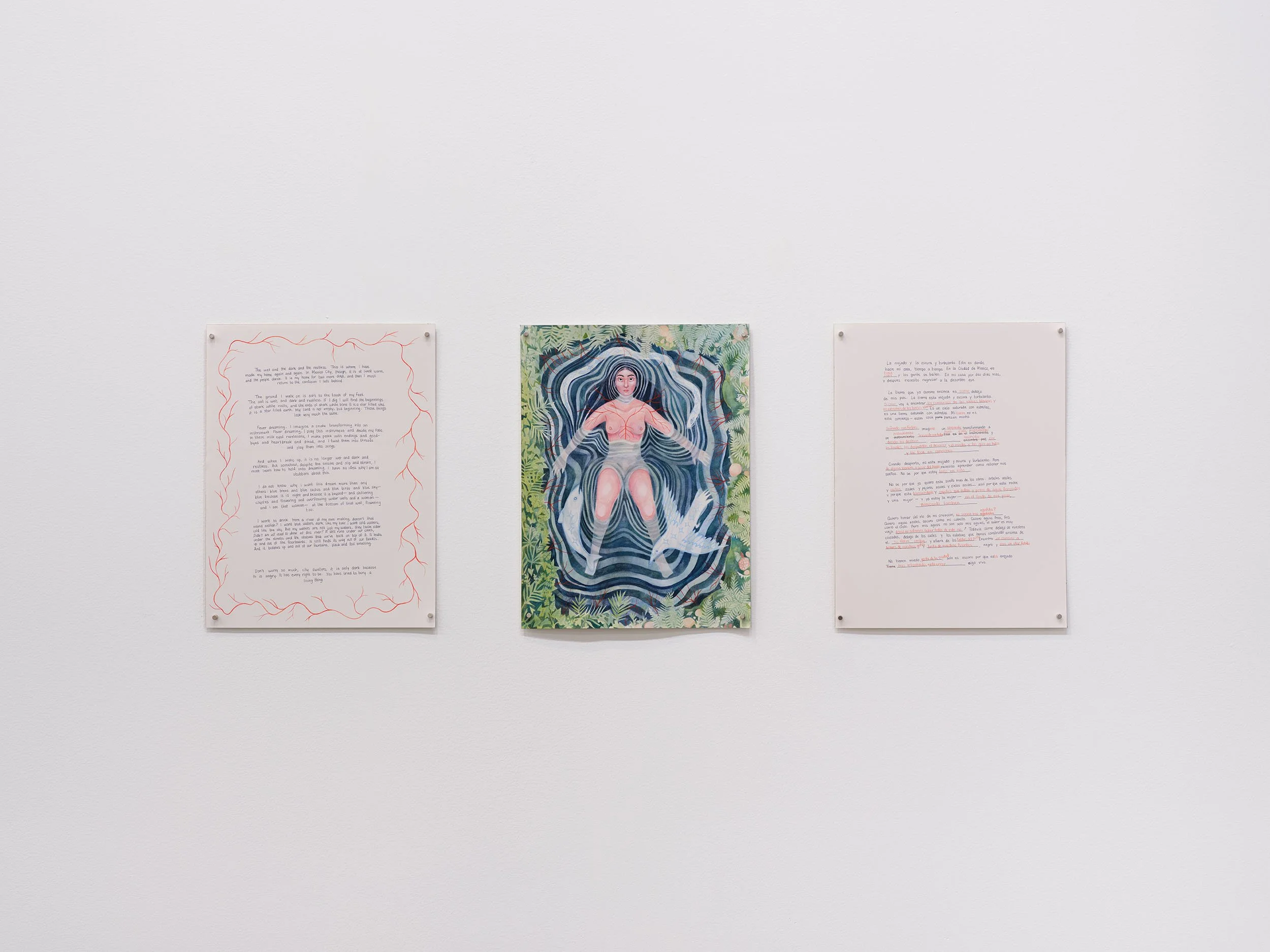
Statement: I wrote this poem while in Mexico City, visiting family that I hadn’t seen in 16 years. While there, the only means I had to communicate with my family was in Spanish. I spent the nine days trying to rapidly relearn what I knew—stumbling over words, mangling the grammar, and nervously googling translations. When I set about translating the poem, I sought to do so as authentically as possible, with only what I know now, correcting or shifting words only after I had already put them on the page, and leaving blanks where I lacked knowledge, only filling them out after the fact.
Spanish has always felt clumsy on my tongue. It does not feel like mine. Mexico does not feel like mine either, though its imagery and its history have inspired me in many ways. When I was there, I both felt like I was a complete outsider and yet also like I was finally coming home. I wanted to belong to it so badly. But it was clear that as much as my family loved me, they viewed me as American. I was told the same thing I had always heard back in the States: that I was from somewhere else.
I will always feel between worlds. Ultimately, rootless. But rootlessness has become a space where I can play with the forces of this world and give them new names and new faces. When I think of the language I speak, I think of my paintings. I think of the symbols I draw and the stories I’ve created out of rivers and trees and moon cycles and comets. It felt necessary to translate the poem one last time- into the world of images. There is a fruitful, generative quality to not belonging to any one place. Through my art and my dreams, I create a world that I belong in and a narrative in which to process life through. There is grief that it is not the shared narrative of culture, but at least it is mine.
-
Io Blair is a philosopher and creative whose projects bridge technology, ethics, and participatory art. Her work spans interactive books, video game design, map-making, and purpose-built technology, often exploring how systems of representation shape our values and social realities. She is particularly interested in how creative tools can support collaborative real-world impact.
Originally from the Pacific Northwest, Io currently lives on the road in an RV with her cat, Olive. You can usually find her somewhere between the West Coast and St. Louis, where she co-founded CTRL SHIFT, a video game company focused on creating games for good that support real humanitarian fieldwork.
Statement: This project presents two parallel flow charts that map the fragmented experience of my racial identity. The first chart traces my internal process of self-doubt as I struggle to navigate what I think is expected of me versus my lived experience. It navigates the complicated and often ungenerous process involved in claiming an identity, heritage, or language. The second chart diagrams how I assume others perceive and categorize me based on visual presentation, spoken identity, accent, and the assumptions emergent in each interaction.
The deliberate misalignment in size between these charts reveals the dissonance inherent in living as a mixed-race, white-passing woman. It is a visual representation of the constant negotiations between wanting to be understood without wanting to explain, and between claiming identity and imposed classification.
Virtual Artist Talk: Sunday Feb 15th, 2026 1pm
Reception February 7, 3-5 pm
Gallery Hours 12-5 Friday and Saturday