

Preserved: Holly Ballard Martz & Paul D McKee
October 12-Nov 9
New sculptural works by Holly Ballard Martz & Paul D McKee centering the ideas of preservation through memory and the futile attempts to preserve youth. Check out The Stranger for more details and a movie rec!
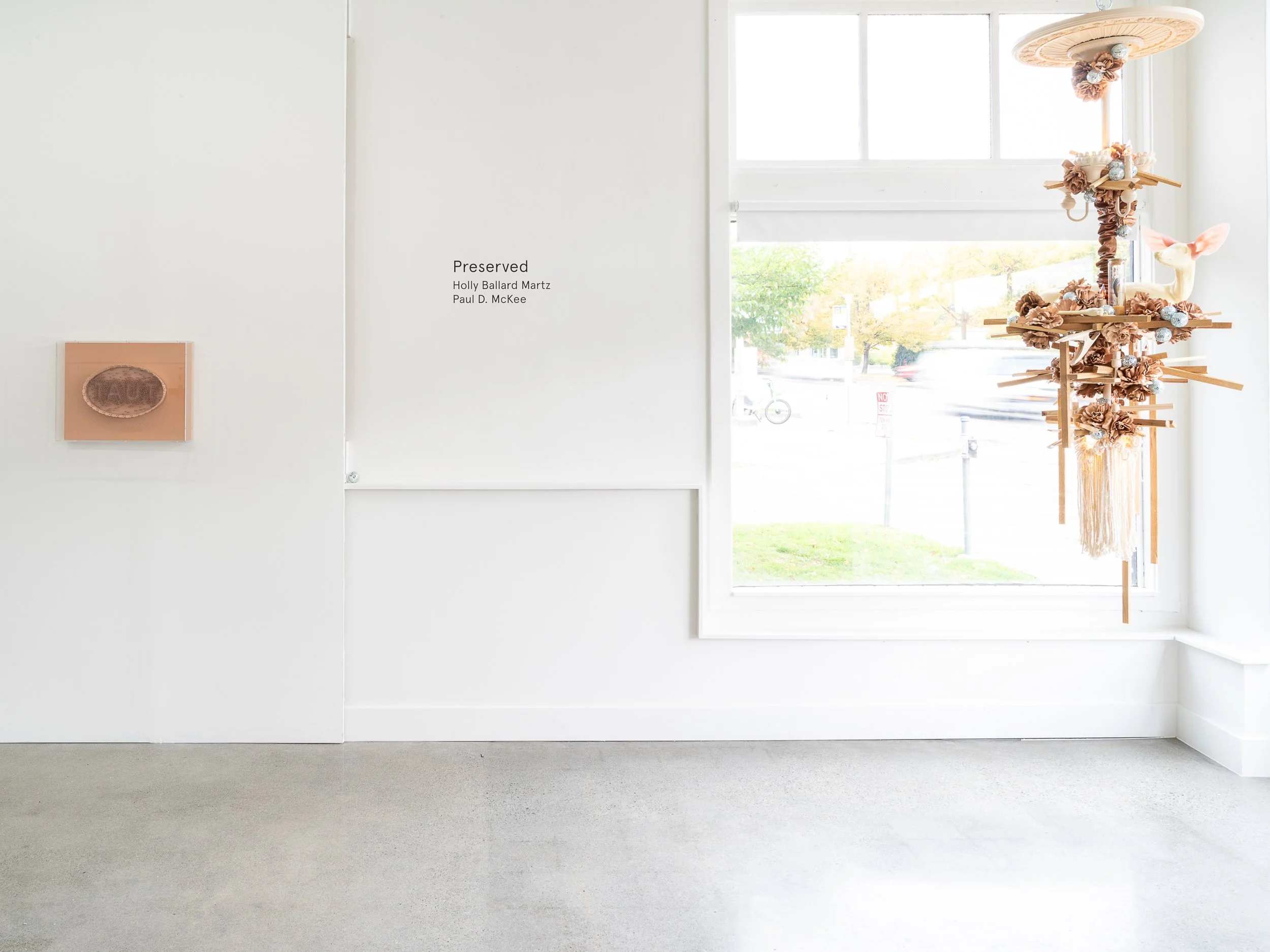
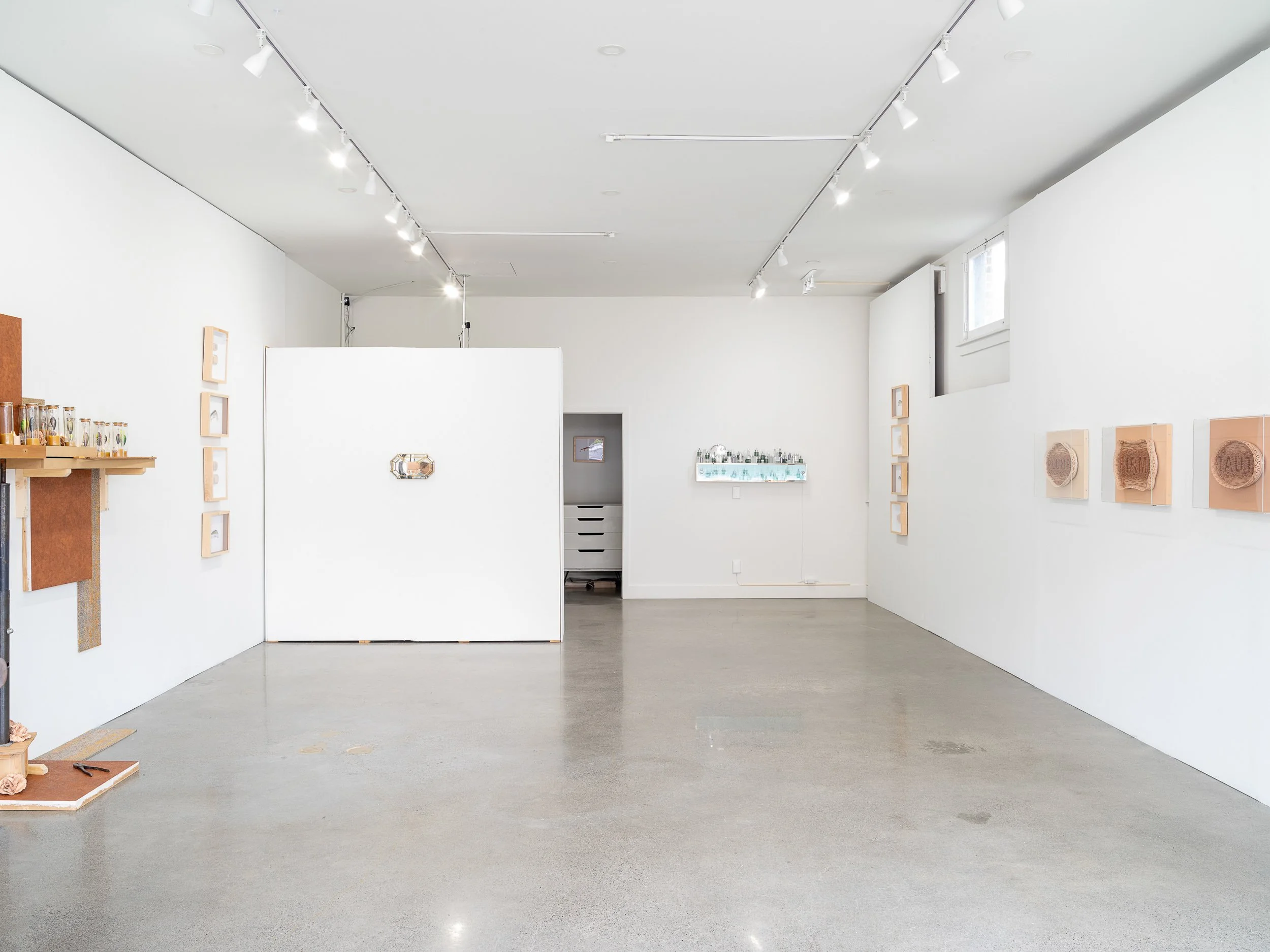
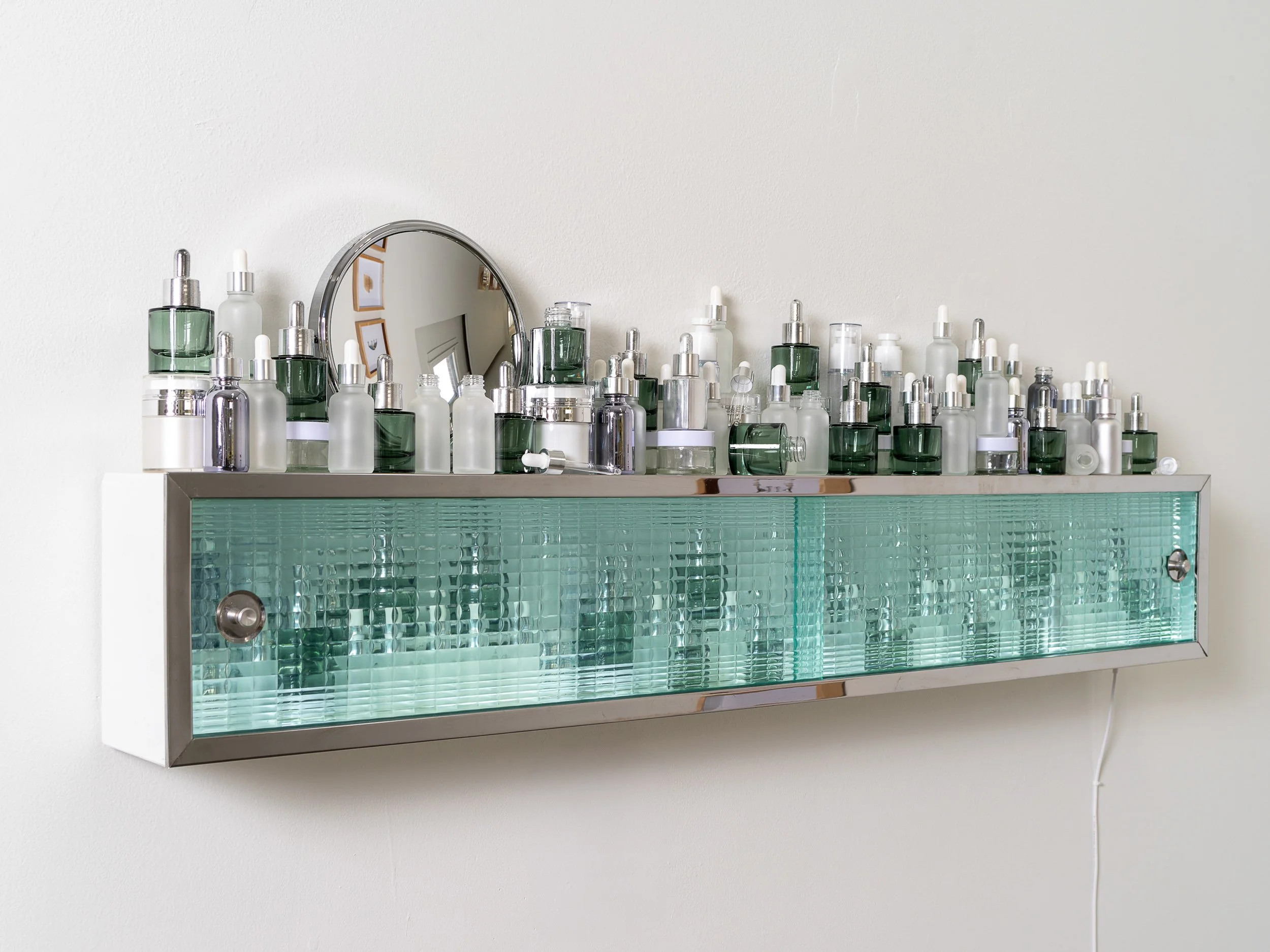
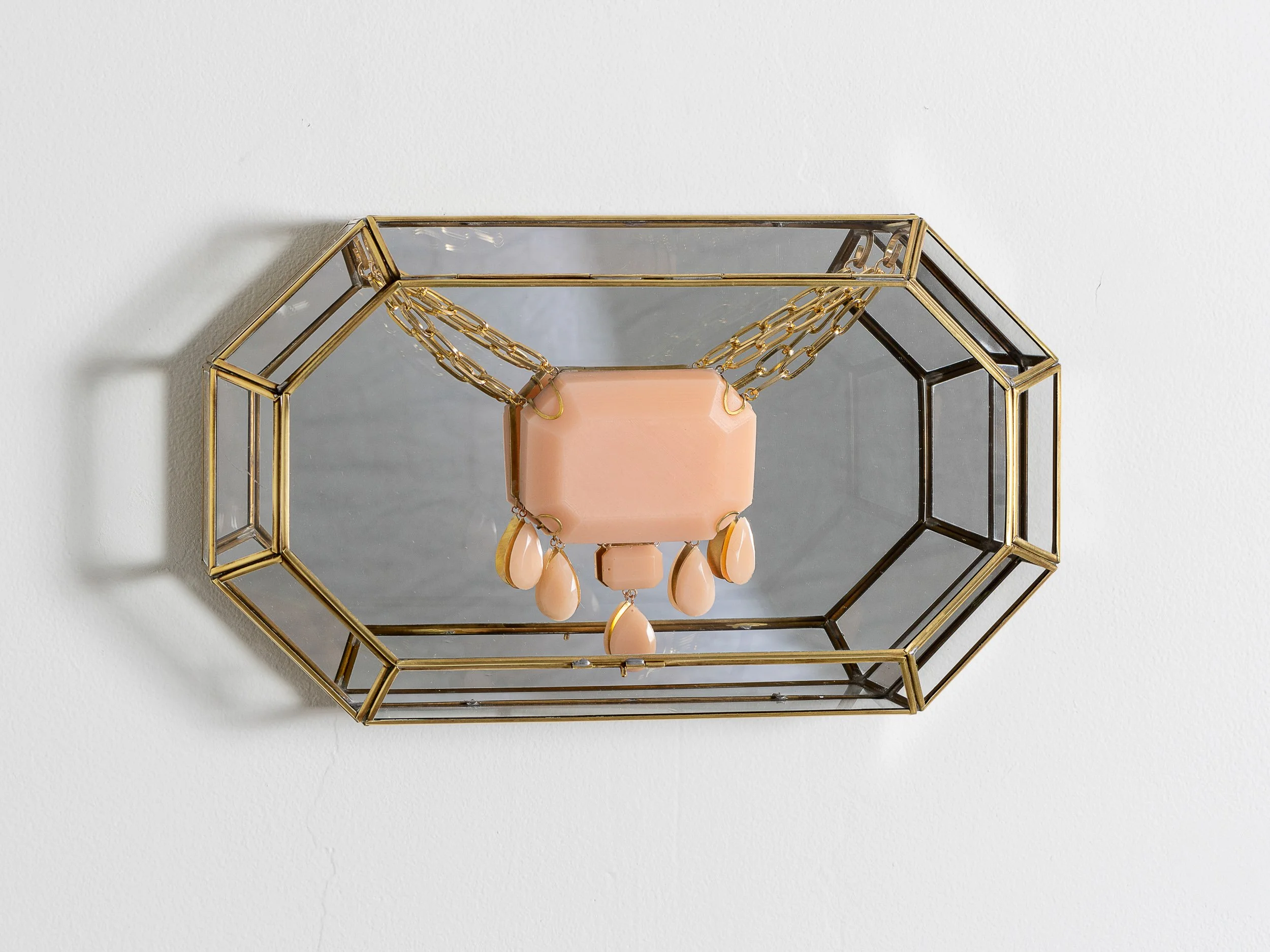
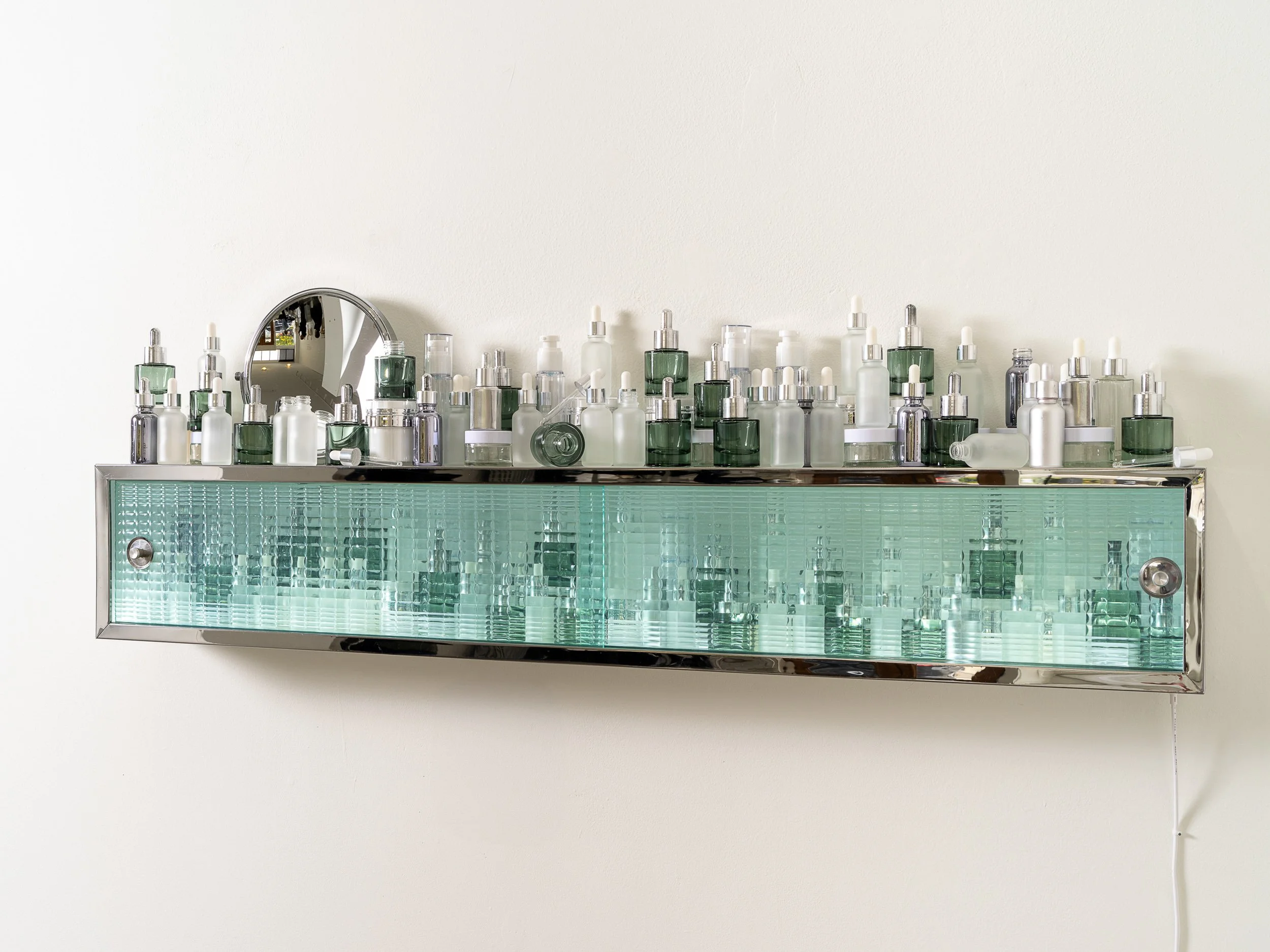
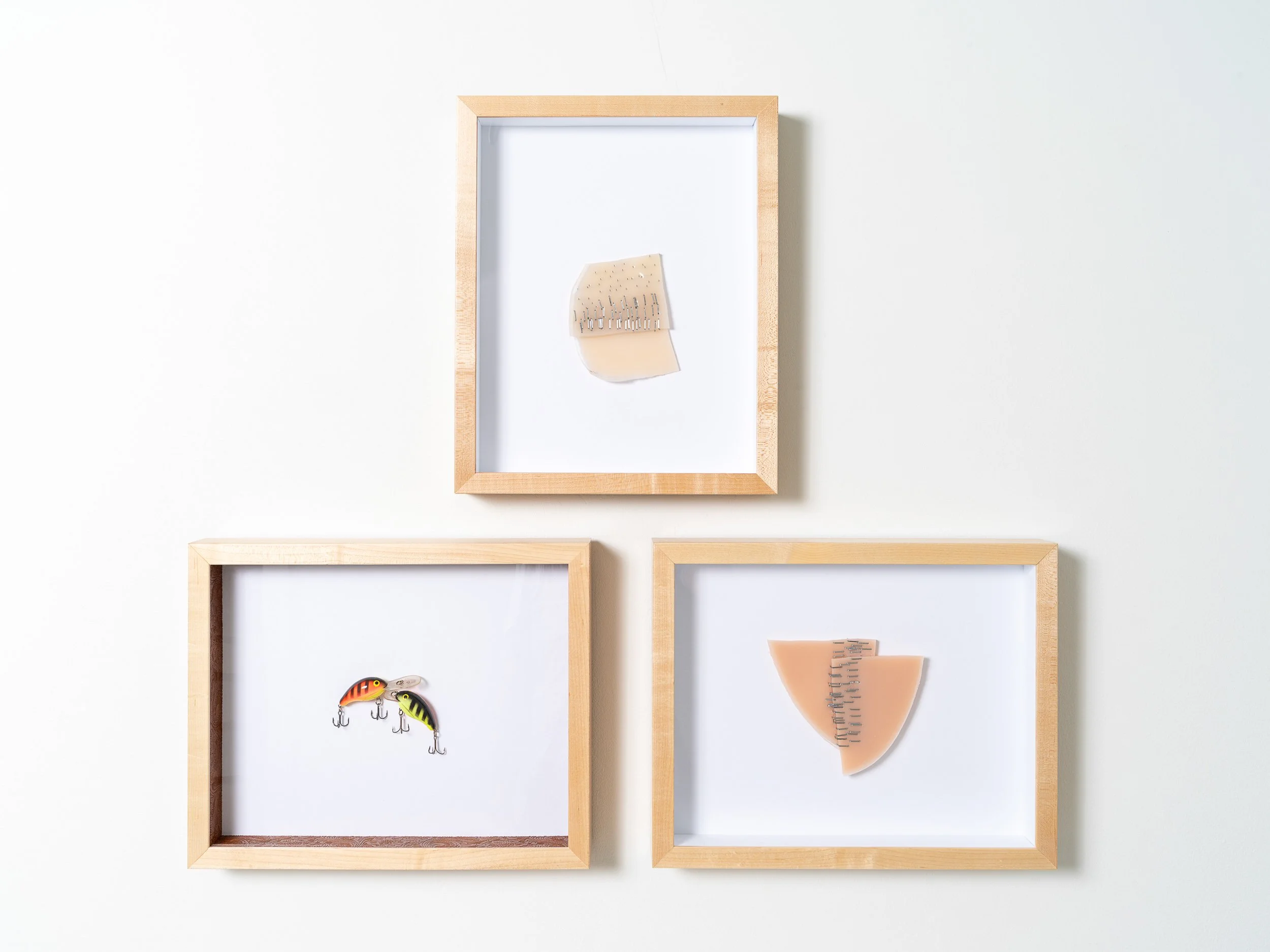
Holly Ballard Martz repurposes found objects into a targeted examination of society’s incessant pressure to arrest the aging process. Vintage vanity trays inlaid with flesh-toned silicone are punctured with hundreds of disposable injection needles, spelling out loaded language and demonstrating the lengths taken and pain incurred to achieve ultimately empty epithets. This same silicone has been cast to resemble classically cut gems and prong-set into a pendant necklace, suggesting evocative context for “costume jewelry” in which a woman’s aging body is divorced from personhood and judged only by what hangs from it. Meanwhile, a vintage medicine cabinet shows off a skyline of unlabeled containers for all the countless lotions, potions, and serums marketed to women with the promise of youth in perpetuity. Lit from the interior, textured acrylic doors serve to obfuscate that promise, and the distorted, illusory reflections remind the viewer not all is as a label claims.
Martz is a multidisciplinary artist who makes conceptually based sculptures and installations. Through the transformation of familiar objects, she challenges societal norms and power structures while simultaneously encouraging viewers to question their perceptions. Known for her meticulously crafted work, Martz often addresses difficult or controversial subject matter under the guise of beautifully fabricated and embellished pieces. She is the recipient of multiple awards, including a McMillen Foundation Fellowship, an Artist Trust Grant for Artist Projects, a Seattle Office of Arts and Culture CityArtist Award, and she was a 2022 Neddy Artist Award Finalist. Martz has exhibited extensively and her work is held in many private and public collections, including the Gates Foundation, the University of Washington, and the City of Seattle.
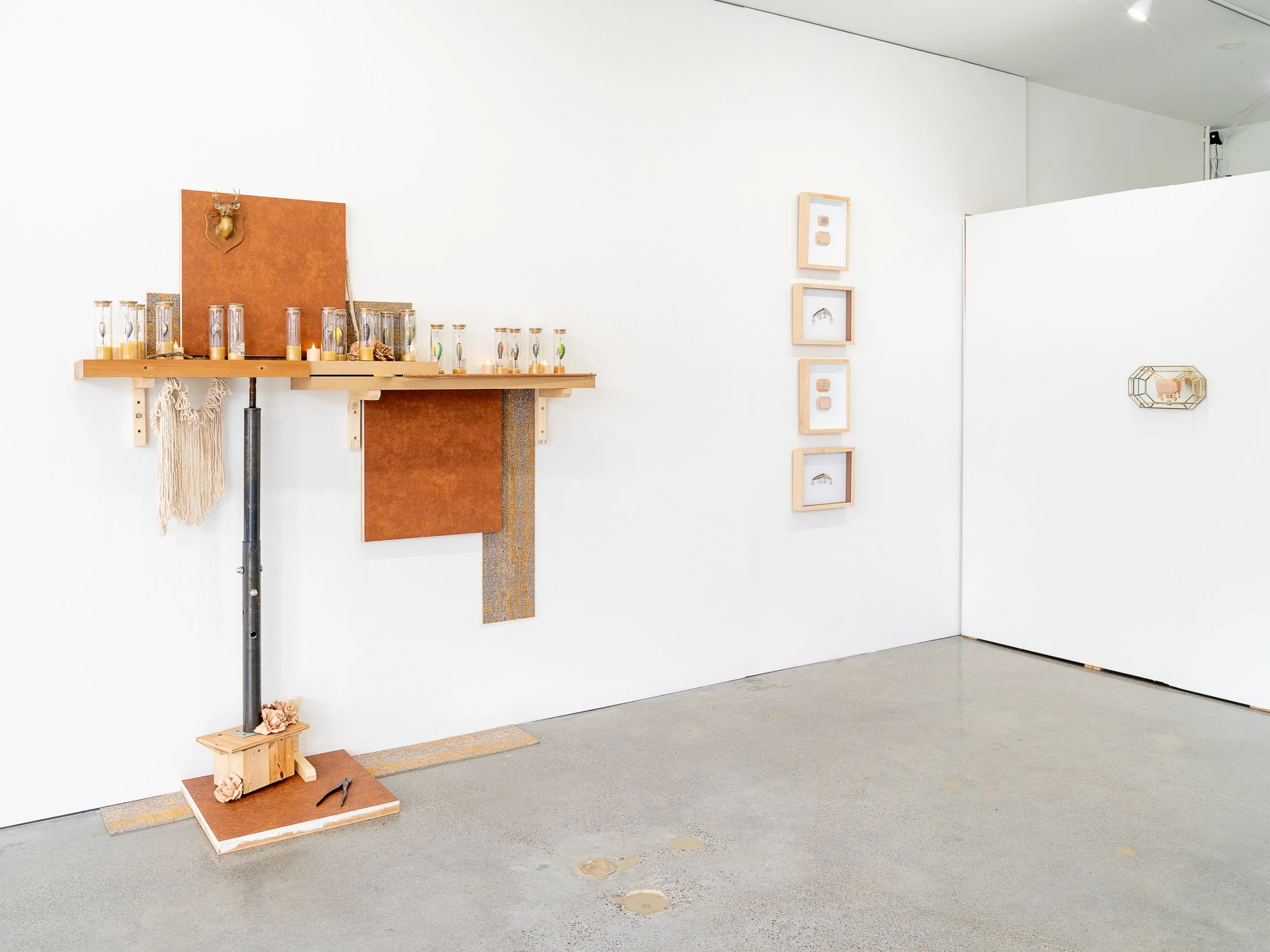
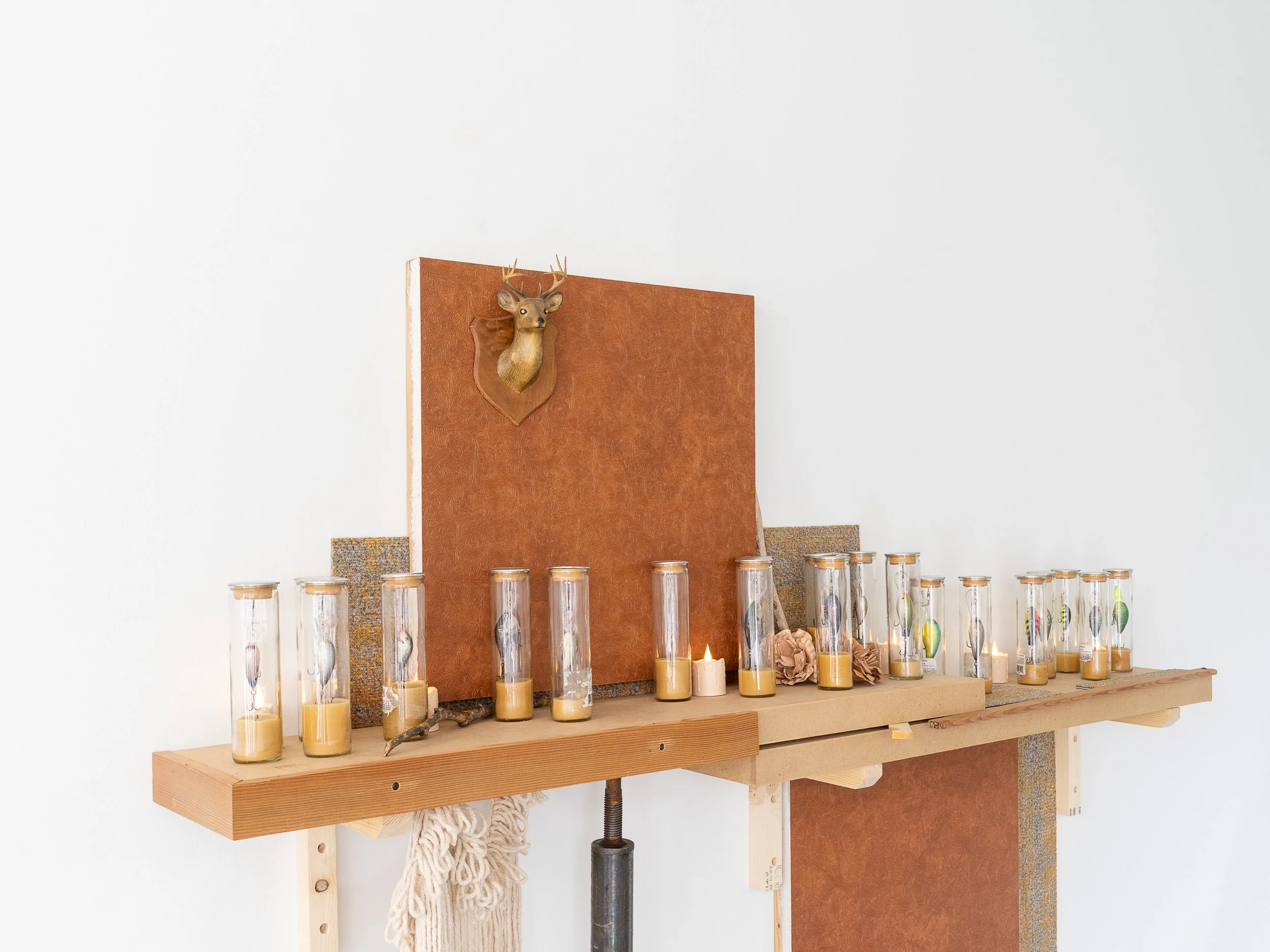
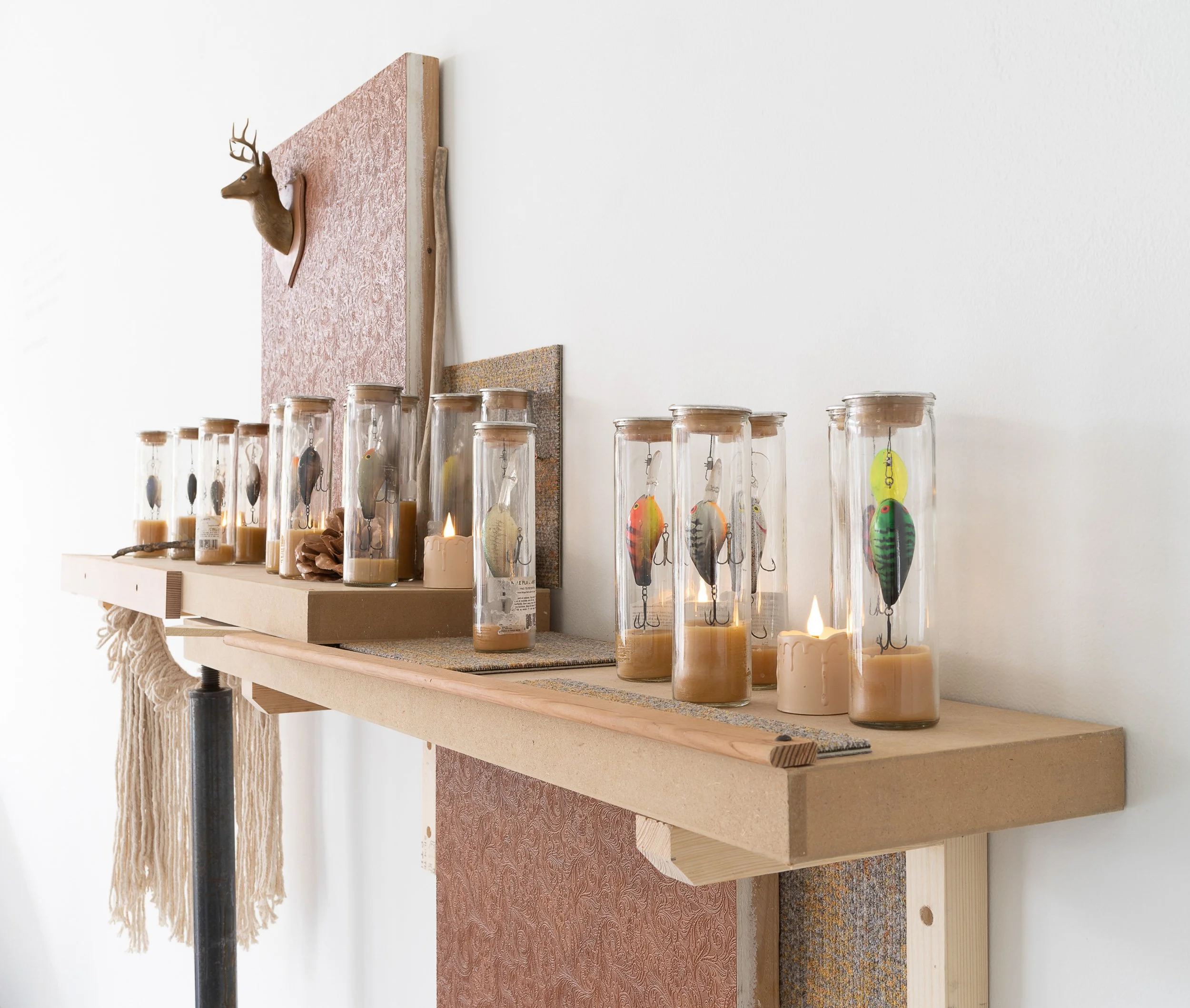
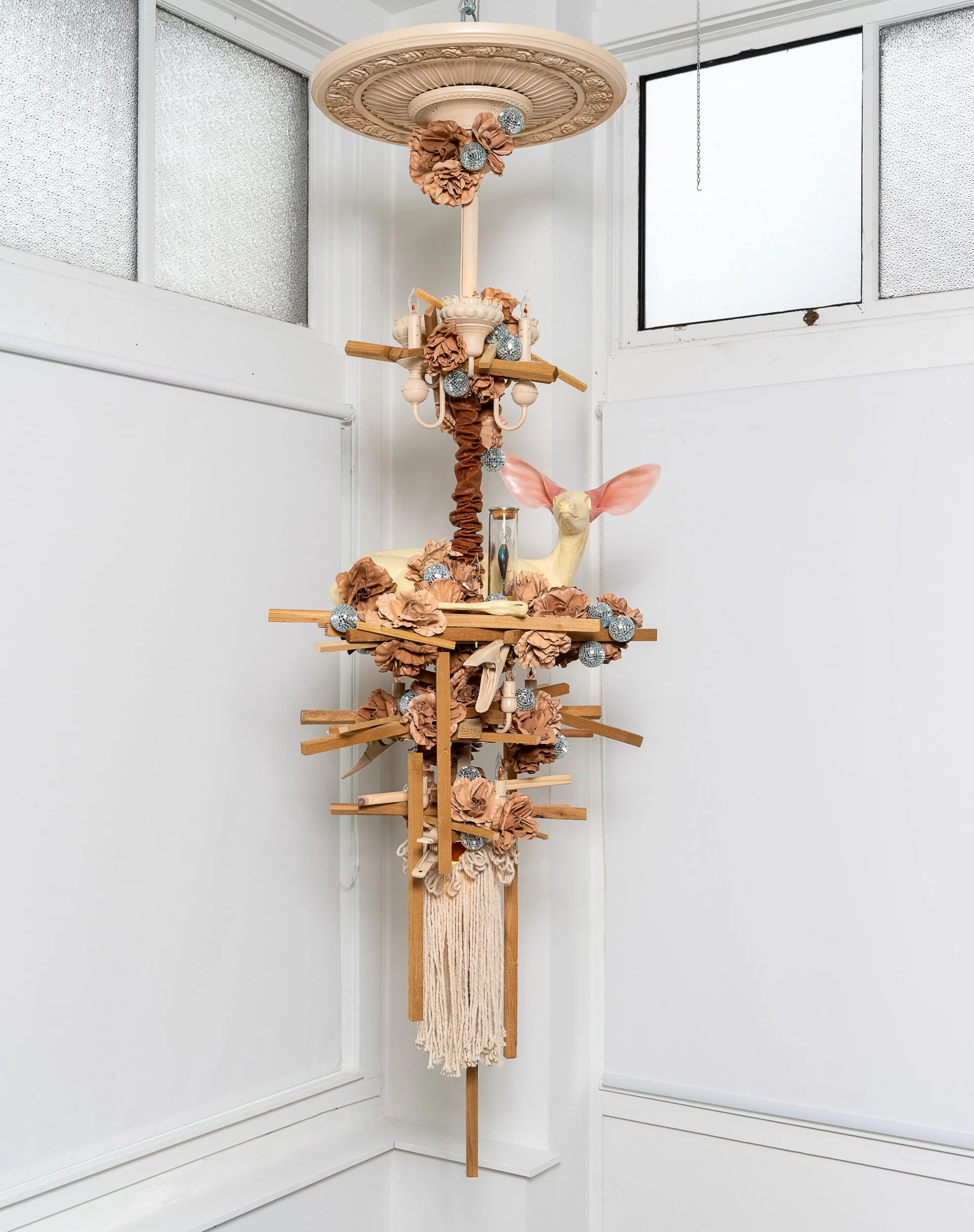
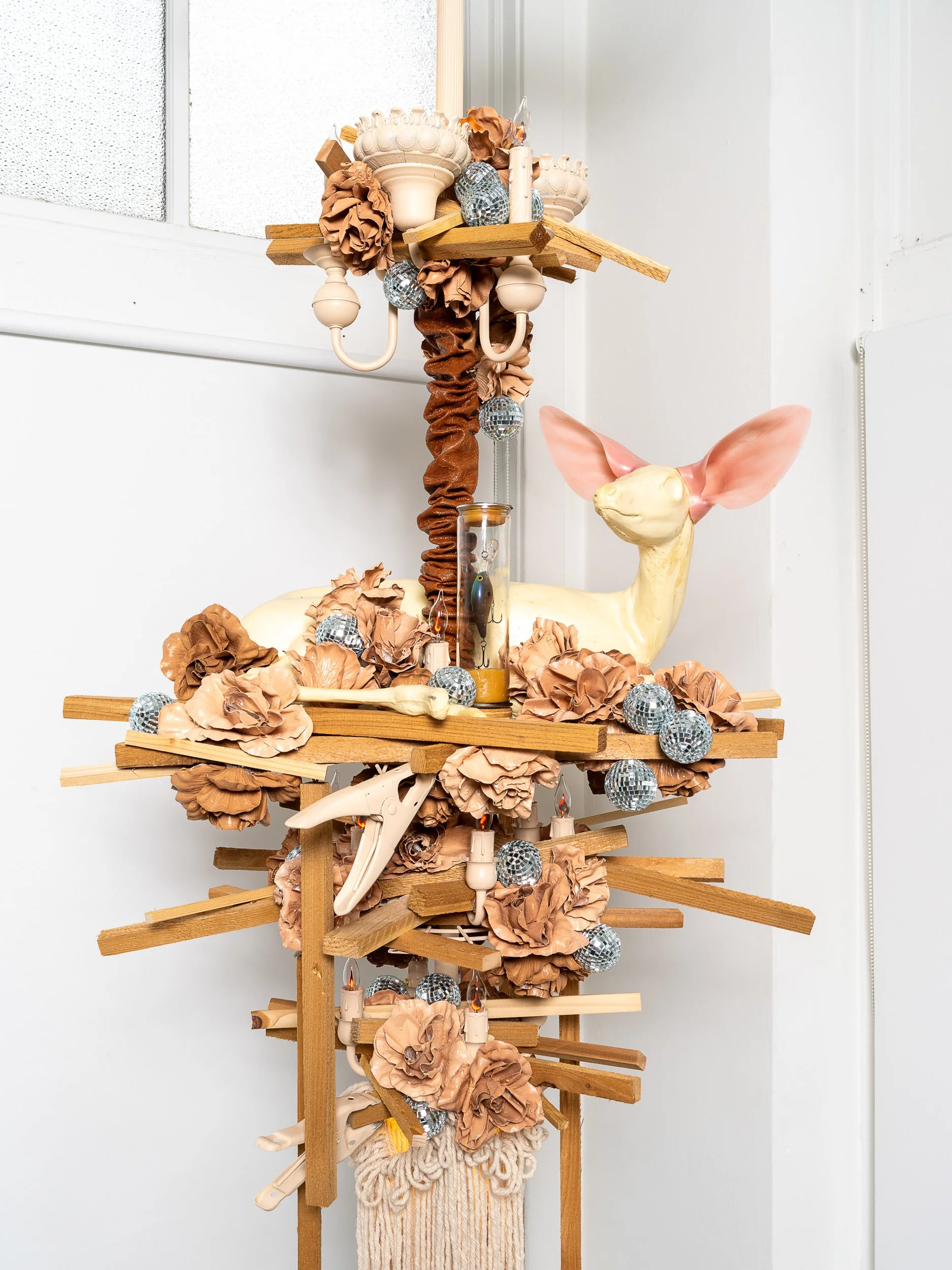
Paul D. McKee fabricates art out of remnants. Scraps from previous creations, mementos from the past, and debris from consumer culture are transformed into works that range from minimally formalist to deftly referential. Fishing lures from his deceased father are enshrined in tall glass votives, leftover from a murdered stranger’s curbside memorial next to the artist’s home. McKee’s works of art are both memento mori and offerings of renewal and repurpose.
The accumulation of life experiences over the last ten years — including a bout with cancer, the witnessing of unnecessary death, moving his mother out of her home of forty years — have led McKee to consider what is lost and what remains. But the art is not entirely elegiac. The work is joyful and beautiful. He tinkers and plays and teases the viewer. McKee is making what he wants to make, combining objects and media and fragments in unexpected ways that depart from his previous bodies of work. What lives on, however, is a wry sense of humor, a fusion of visual pleasure and conceptual play, and an interchange of reality and theatricality.
McKee has long been interested in blurring the lines between the real and the ideal, the familiar and the unfamiliar, often in order to expose heteronormative visions of home life and gender, representations of the American dream long exclusionary for the gay community. In his current work, McKee adds ideas about time, remembrance, ecology, and consumerism, using donated and found materials, along with vestiges and leftovers from his previous practices. Artistic industrial, and everyday detritus are combined with items infused with memory and meaning. And all of it becomes new. There is often a juxtaposition — or formal fusion — between what should be discarded and what might be recreated, what is “real” and what is simulated. McKee pushes the material to represent what endures, what can be transformed or replicated, and, ultimately, what remains.

Curatorial Statement: On Time and Materials
“Yes, but suddenly one hears a clock tick. We who had been immersed in this world became aware of another. It is painful.” — Virginia Woolf, The Waves
Preserved is the seventh in our 2024 series, Time is the Subject. All the artists showing in this year proposed work about time. Martz and McKee addressed head on the thing about time that we don’t like to talk about. The fact that we have only so much time. The exhibition approaches death from both sides: before and after. Before death, is the material we use to keep us looking young. After death, the living are left with material – all the objects that don’t end with the subject.
Martz’s objects tempt us the way youth tempts the aging. A mirror is a synecdoche for reflecting on mortality – we look in a mirror to check how well it’s going, to check the skin, to search for clues, to see the time on the stopwatch. With a precise color palette, McKees draws together a dispersed mass of reused objects into beautiful altars and ornaments. Luscious, decorative, the work draws us in to contemplate these dark and difficult issues. And just before things feel too serious, we find a joke: a sparkling eye, a dirty word, a fishy threesome.
Their work asks us, as Virginia Woolf’s narrator says, to become aware of another world. To do this, knowing it will be painful. So painful we have to laugh. The work asks us to look at our desires to stay alive: to stay young, to accumulate objects as if there is no finite time to enjoy them, to live as if there are no consequences for those who survive us.